Fire & smoke damage restoration
The flame stops at the walls. The smoke doesn't.
Soot travels on air currents into rooms the fire never reached, and it's acidic. It starts permanently etching metal, glass, grout and finishes within about 72 hours. Which is why the clock that matters after a fire isn't the one you think.
What actually happens after a fire
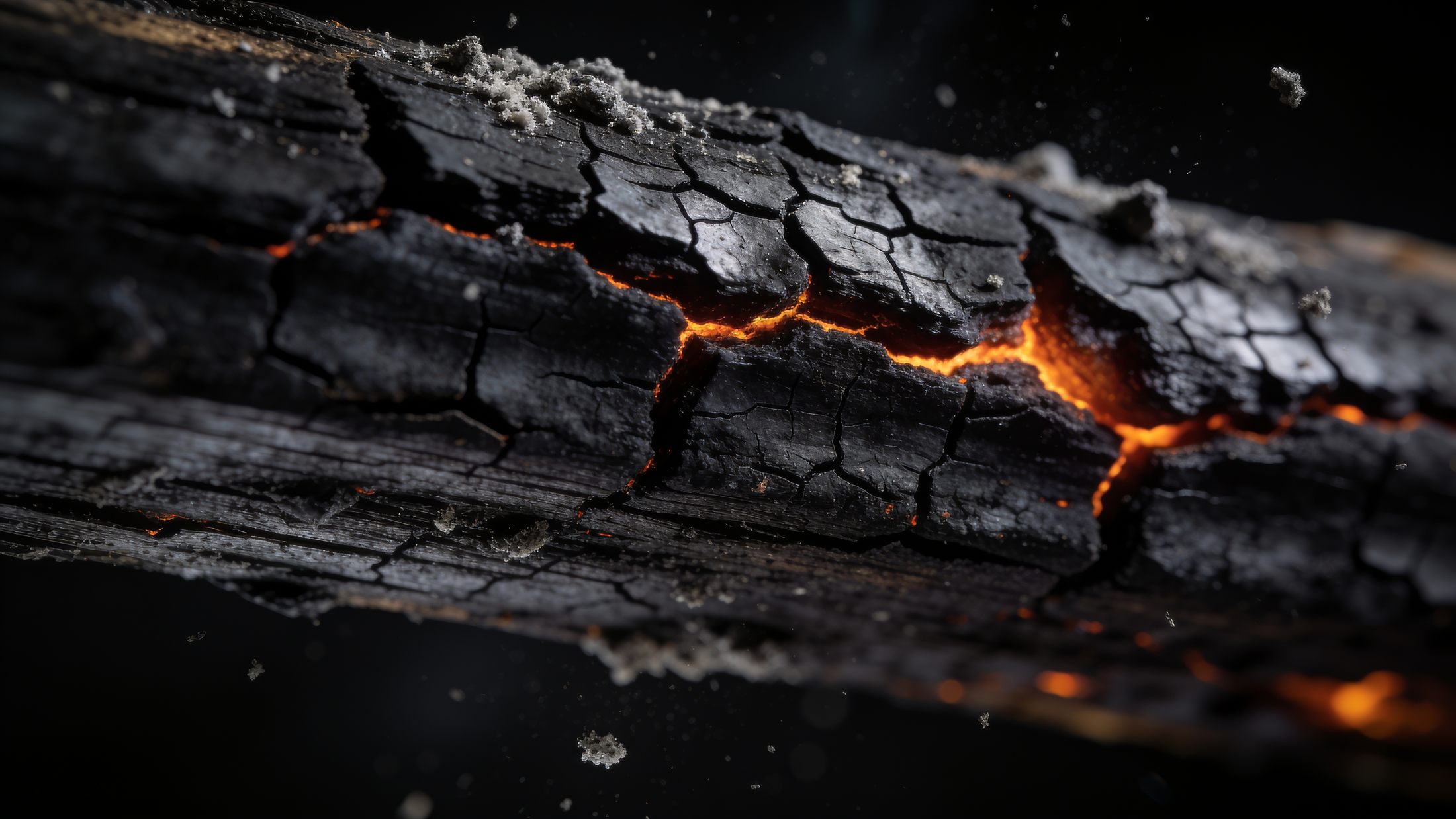
Most people expect the damage to be the burnt part. In practice a fire loss has four separate layers, and three of them are invisible from the doorway.
- Structural fire damage: charring, weakened framing, collapsed materials
- Smoke and soot residue: spread through the whole structure by air movement and HVAC
- Odor: absorbed into porous materials, drywall, insulation and contents
- Water damage: from firefighting, often across a much larger area than the fire itself
All four have to be handled, and in the right order. Cleaning soot before the structure is stabilized wastes the work; rebuilding before the odor is neutralized traps it in the walls.
Dry soot smears into porous surfaces and sets permanently. The instinct to start cleaning is completely understandable and it is the single most expensive mistake we see after a fire. Leave it, photograph it, and call.
Types of smoke residue
Different fires leave different residues, and each needs different chemistry. Using the wrong method sets the staining instead of lifting it.
Dry smoke
From fast, high-temperature fires. Powdery and relatively easy to remove, but it works its way deep into cracks and cavities.
Wet smoke
From slow, smouldering, low-heat fires. Sticky, dense, strong-smelling and difficult. It smears badly if approached wrongly.
Protein residue
From kitchen fires. Nearly invisible, discolors paint and varnish, and carries an extremely persistent odor. It's the one people miss entirely until the smell won't go.
Fuel oil soot
From furnace puff-backs: a sudden distribution of oily black soot through the entire duct system and every room served by it.
How we work a fire loss
- Make safe. Nothing starts until the fire department has cleared the structure and we've assessed what's stable.
- Secure and document. Board-up and tarping where the envelope is open, then photograph every room before anything is touched.
- Water first. Firefighting water gets extracted and the structure dried: otherwise you add a mold problem to a fire problem.
- Containment and air. HEPA air scrubbers and negative air stop soot migrating into unaffected areas while we work.
- Contents. Salvageable belongings are inventoried, packed out and cleaned off-site. Everything is documented for your claim.
- Surface cleaning. Room by room, ceiling down, matched to the residue type.
- Deodorization. Hydroxyl or ozone treatment breaks down the compounds carrying the smell rather than covering them.
- Rebuild. Drywall, paint, flooring, trim: put back the way it was.
Odor is not a fragrance problem
If a company's answer to fire odor is a scented fogger, the smell comes back the first humid week. Smoke odor comes from compounds absorbed into porous materials; it has to be neutralized at the source, and sometimes sealed. If you can still smell it, the job isn't finished.
Your insurance
Fire and smoke damage is a covered peril on virtually every homeowner policy, including the water damage caused by putting the fire out. Keep every receipt for temporary lodging, meals and essentials: additional living expense is usually covered too.
We document the damage, provide estimates, and communicate with your adjuster directly. More on how claims work →
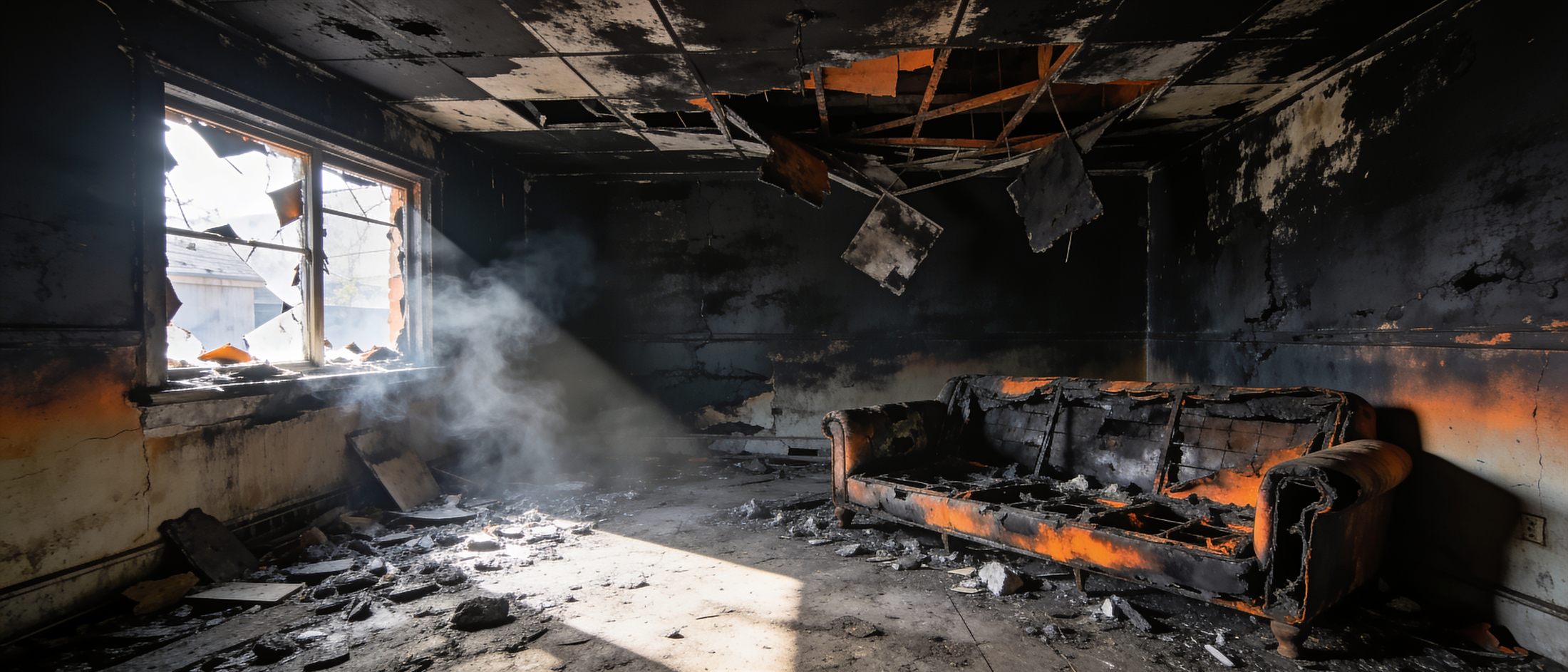
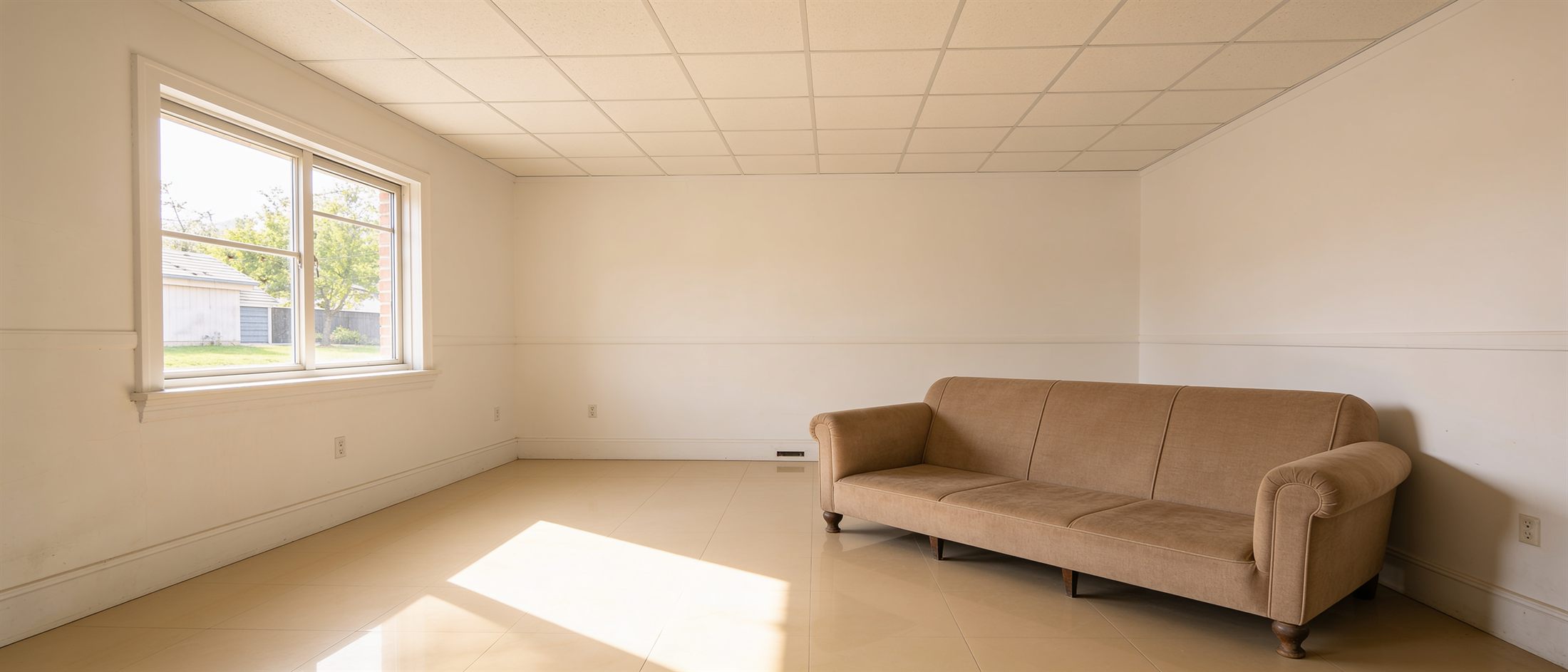
Before & after
A living room, brought back.
Same room, same camera position. Drag to compare.
Common questions
Fire damage FAQ
Can the smoke smell really be removed?
Are my belongings salvageable?
Why is there water damage too?
Can I stay in the house?
How long does the whole thing take?
Soot doesn't wait.
Acidic residue starts etching surfaces within days. The sooner we're on site documenting and stabilizing, the more of your home survives.