
Water damage restoration
Water doesn't stay where it lands.
It wicks up drywall, tracks under flooring and sits in cavities you can't see. That's why we map the moisture before we start drying, and why we keep measuring until the numbers say it's actually dry.
What we handle
Most of the water losses we see in La Puente and across the San Gabriel Valley come from the same handful of causes, and almost all of them are covered by a standard homeowner policy when they happen suddenly.
- Burst and frozen pipes, including supply lines behind walls and under slabs
- Failed appliance connections: dishwashers, washing machines, refrigerator lines, water heaters
- Roof and window leaks after storms or wind damage
- Slab leaks that soak carpet and padding from underneath
- Overflows from tubs, sinks and toilets
- Sewer and drain backups: Category 3 contaminated water, handled under containment
The three categories of water
Not all water is the same, and the category drives everything: what can be saved, what has to be removed, and how the job is priced.
Category 1: clean water
From a sanitary source: a supply line, a water heater, rainwater. Most materials can be dried in place if we get to them quickly. Left sitting, Category 1 degrades into Category 2 within about 48 hours.
Category 2: gray water
Significantly contaminated, washing machine discharge, dishwasher overflow, toilet overflow with no solids. Carpet padding and some porous materials come out.
Category 3: black water
Grossly contaminated: sewage, sewer backups, rising flood water from outside. This is a health hazard rather than just a property loss. Porous materials it has touched generally cannot be saved, and the work happens under full containment with negative air.
Clean water becomes contaminated and mold begins colonizing porous materials in roughly 24–48 hours. That window is the single biggest factor in how much of your property can be saved, and how large the claim ends up being.
How we dry it
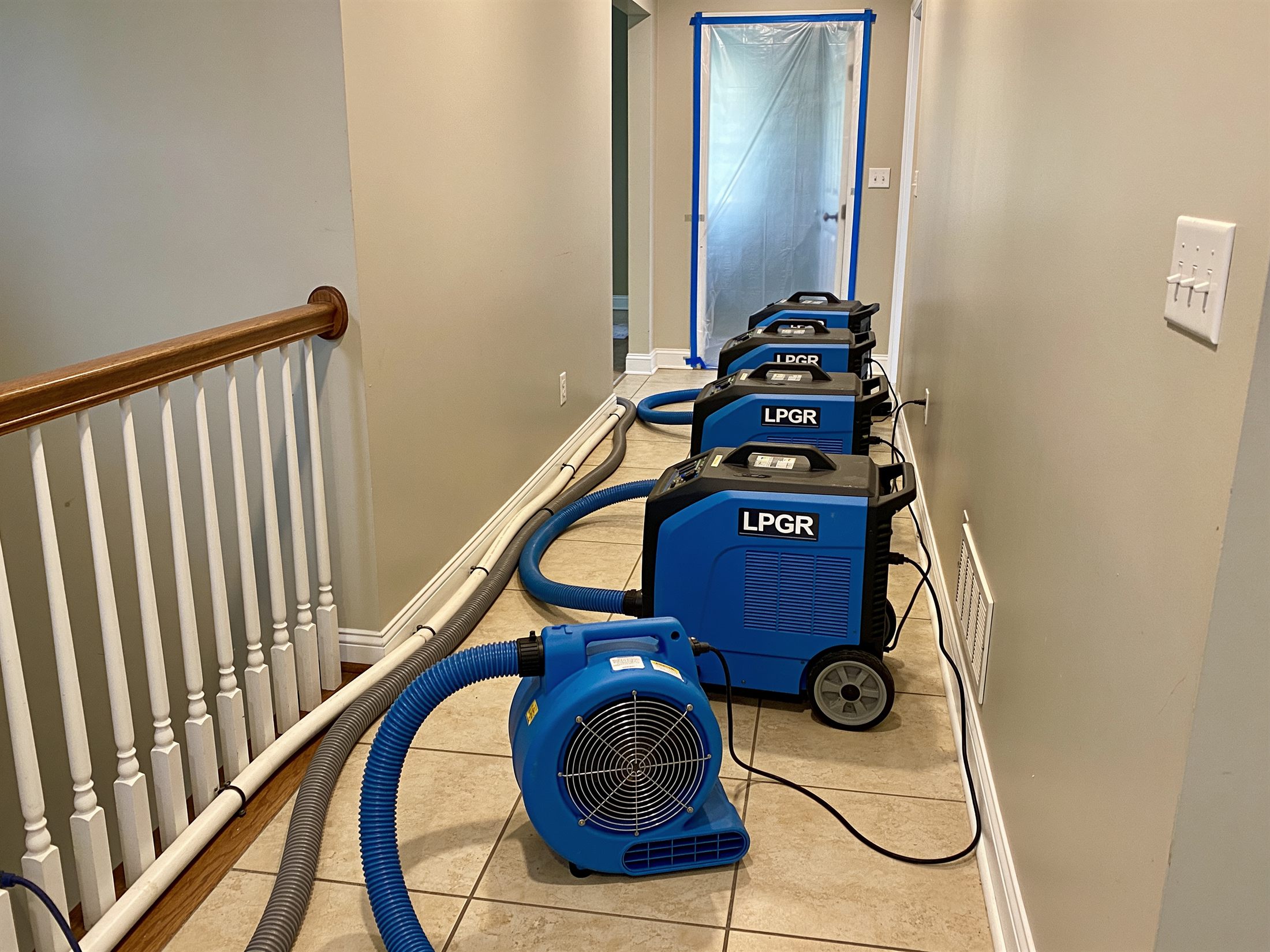
Drying is not "put fans on it and come back next week". It's a measured process with a defined endpoint.
- Moisture mapping. Thermal imaging and pin/pinless meters find where water actually traveled: which is almost always further than the visible damage.
- Extraction. Standing water and trapped water in carpet and padding comes out first. Every gallon extracted is a gallon that doesn't have to be evaporated.
- Equipment sizing. Air movers and dehumidifiers are sized to the affected volume and the class of loss, not guessed at.
- Daily monitoring. Readings are taken and logged every day in the same locations, so the drying curve is documented.
- Verification. The job is dry when materials reach the documented dry standard for that material, not when it looks dry.
When materials have to come out
Sometimes drying in place isn't possible. A flood cut, removing drywall to a set height above the water line, is standard when insulation is saturated or the water was Category 2 or 3. It's cut straight, cut once, and only as far as the damage goes.
We'd always rather dry a material than replace it. Replacement costs you more, takes longer and is harder to get approved.
Your insurance
Most policies cover sudden and accidental water damage, like burst pipes, but not long-term leaks or neglect. We can help review your claim.
We document the damage, provide estimates, and communicate with your adjuster directly. More on how claims work →
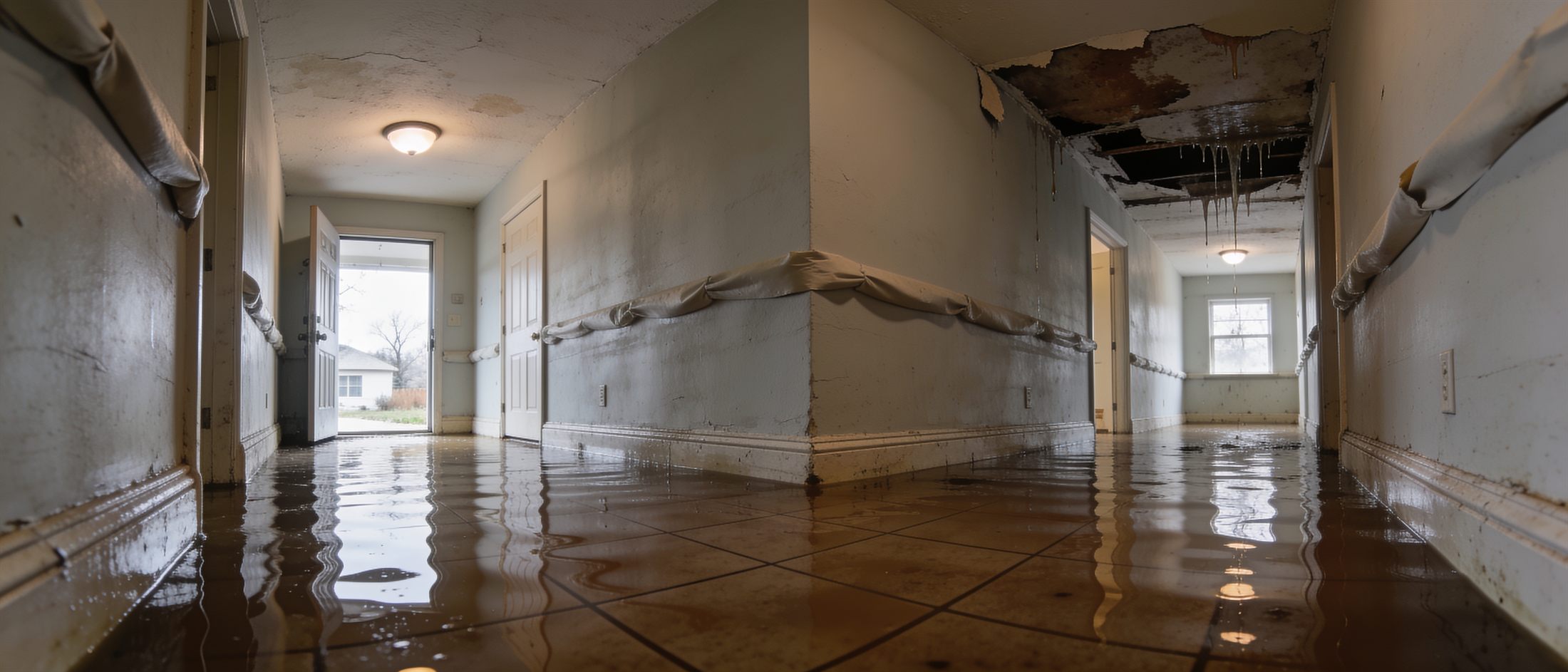
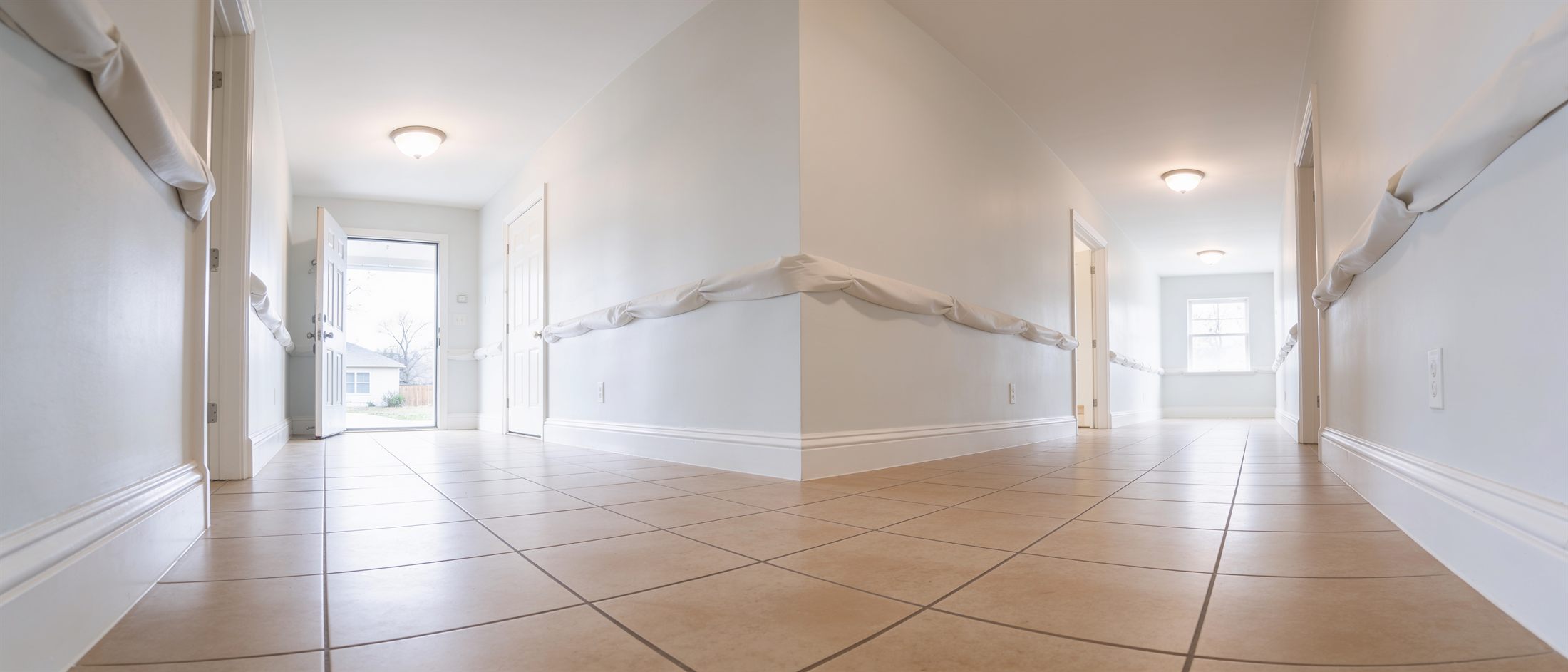
Before & after
A hallway, dried and rebuilt.
Same camera position. Drag to compare.
Common questions
Water damage FAQ
Will my insurance cover water damage?
Can you save my hardwood floors?
How long does drying take?
Do I have to move out?
What if it's been wet for a while?
Every hour matters.
Water spreads while you decide. The sooner we're documenting and drying, the smaller the job, and the cleaner the claim.