
6 documented sequences
Damage, and exactly what it takes to undo it.
Most restoration galleries show you a wrecked room and then a nice one, and skip the part you are actually trying to understand: what happens in between, and why it takes as long as it does. These do not. Every case below runs the full sequence from the day of the loss to handover, one stage at a time, from a fixed camera.
Burst supply line under a kitchen sink
Sewage backup through a bathroom floor
Storm roof leak into a bedroom ceiling
Grease fire above a kitchen range
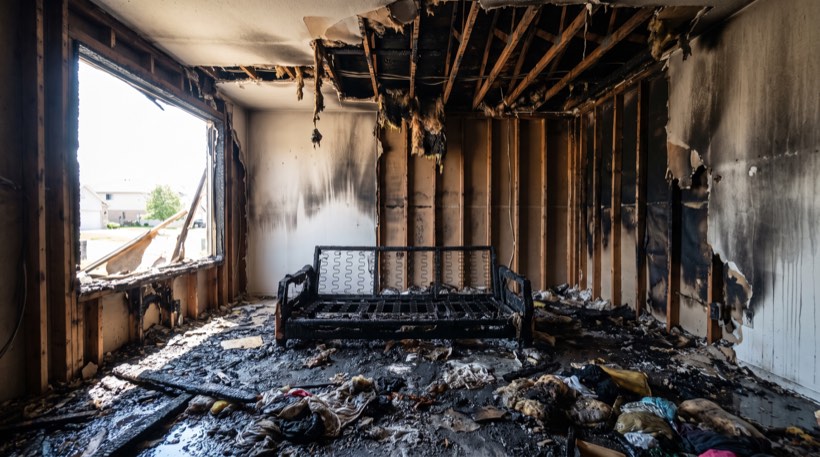
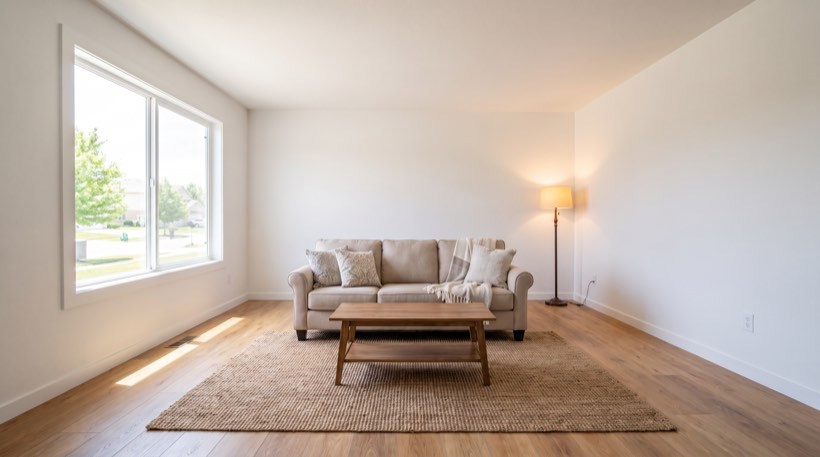
Structure fire in a living room
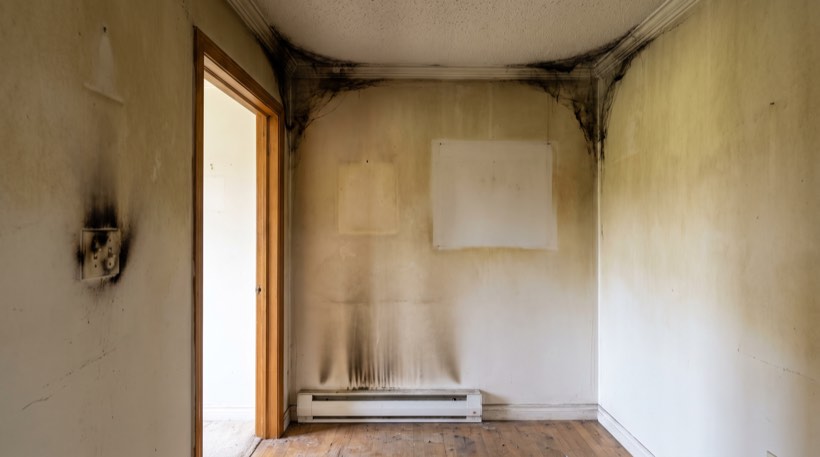
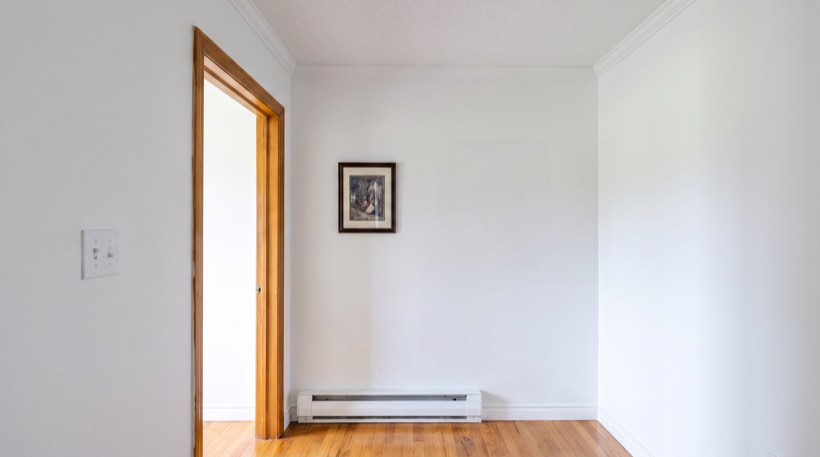
Smoke and soot damage with no burning
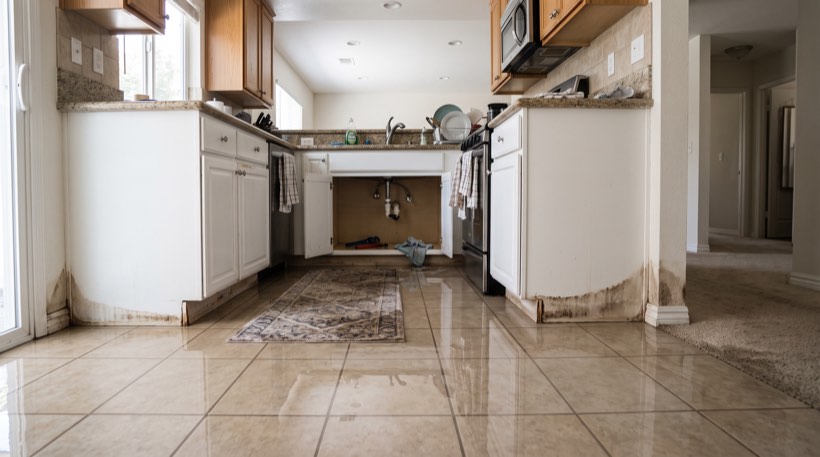
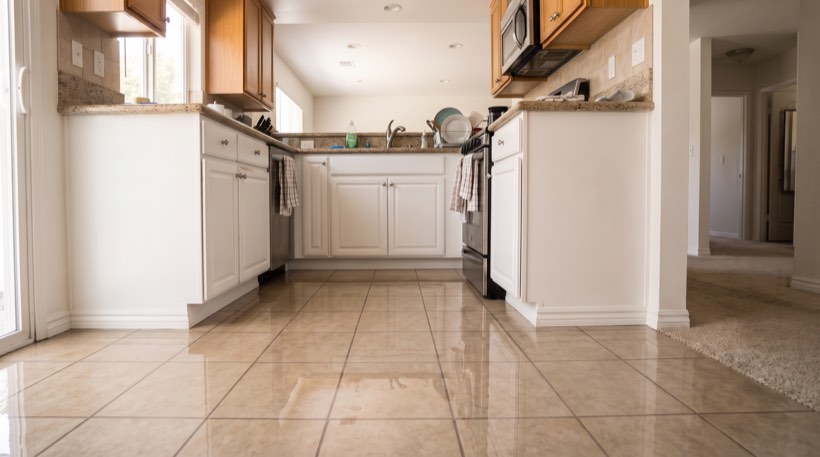
Burst supply line under a kitchen sink
Clean water, fast spread
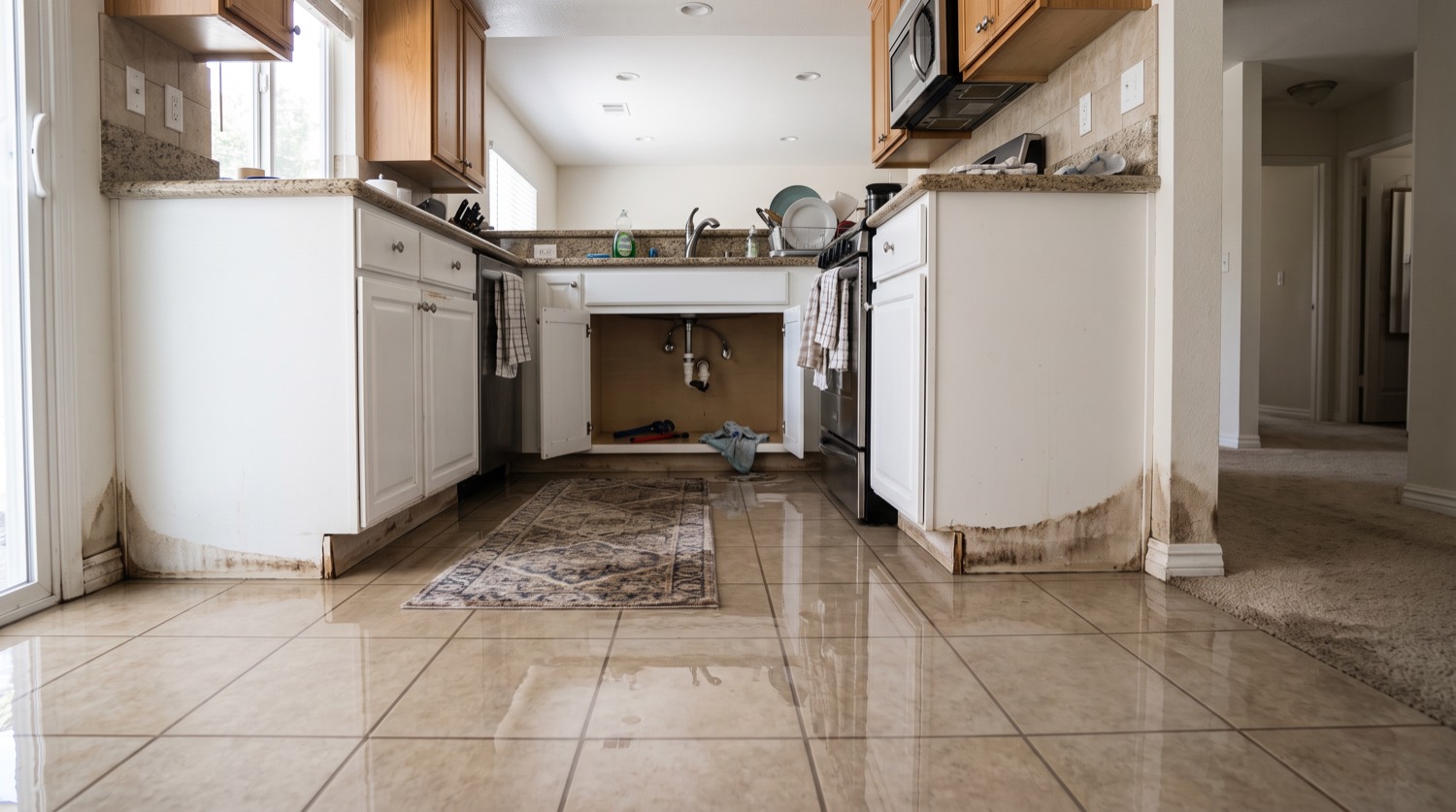
A braided supply line lets go overnight. By morning there is standing water across the kitchen and it has already tracked under the cabinets and into the hallway carpet. What you can see on the floor is a fraction of what is actually wet.
- Category
- 1, clean
- Class
- 2, fast evaporation
- Affected
- ~420 sq ft
- Dry time
- 4 days
-
Category 1 means the water came from a sanitary source. That status is temporary: left sitting against organic materials it degrades to Category 2 within roughly 48 hours, and the scope of the job changes with it.
- Water wicks vertically up drywall and horizontally under cabinet bases
- Carpet pad holds many times its own weight in water
- Nothing is moved or thrown away until it has been photographed
-
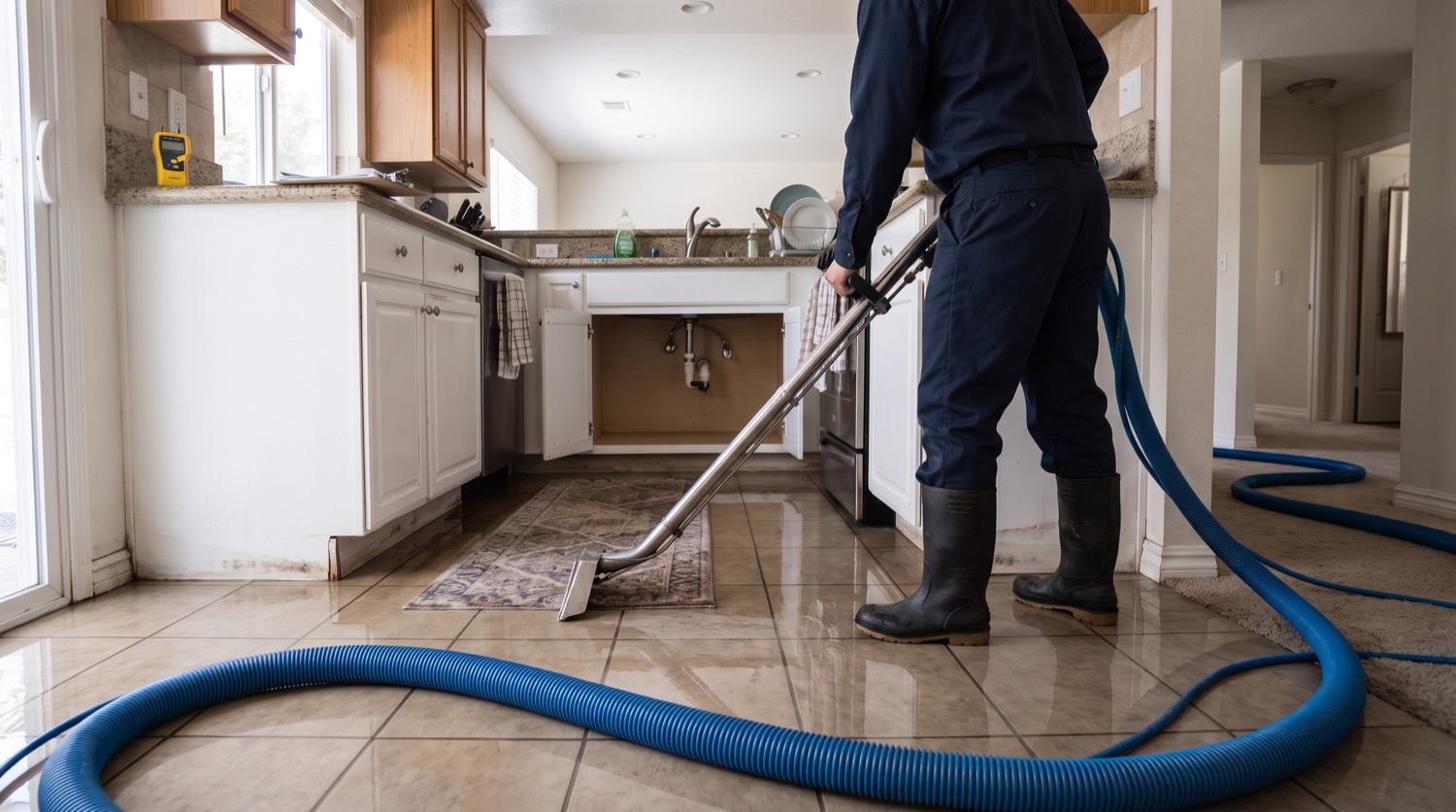
Extraction is the highest-leverage hour of the whole job. Weighted extraction over carpet, wand over hard surface, and a moisture map drawn before anything is disturbed so the wet perimeter is a documented boundary rather than a guess.
- Moisture mapping and thermal imaging define the affected area
- Standing water removed, then trapped water pulled from the pad
- Readings logged against unaffected material as a dry reference
-
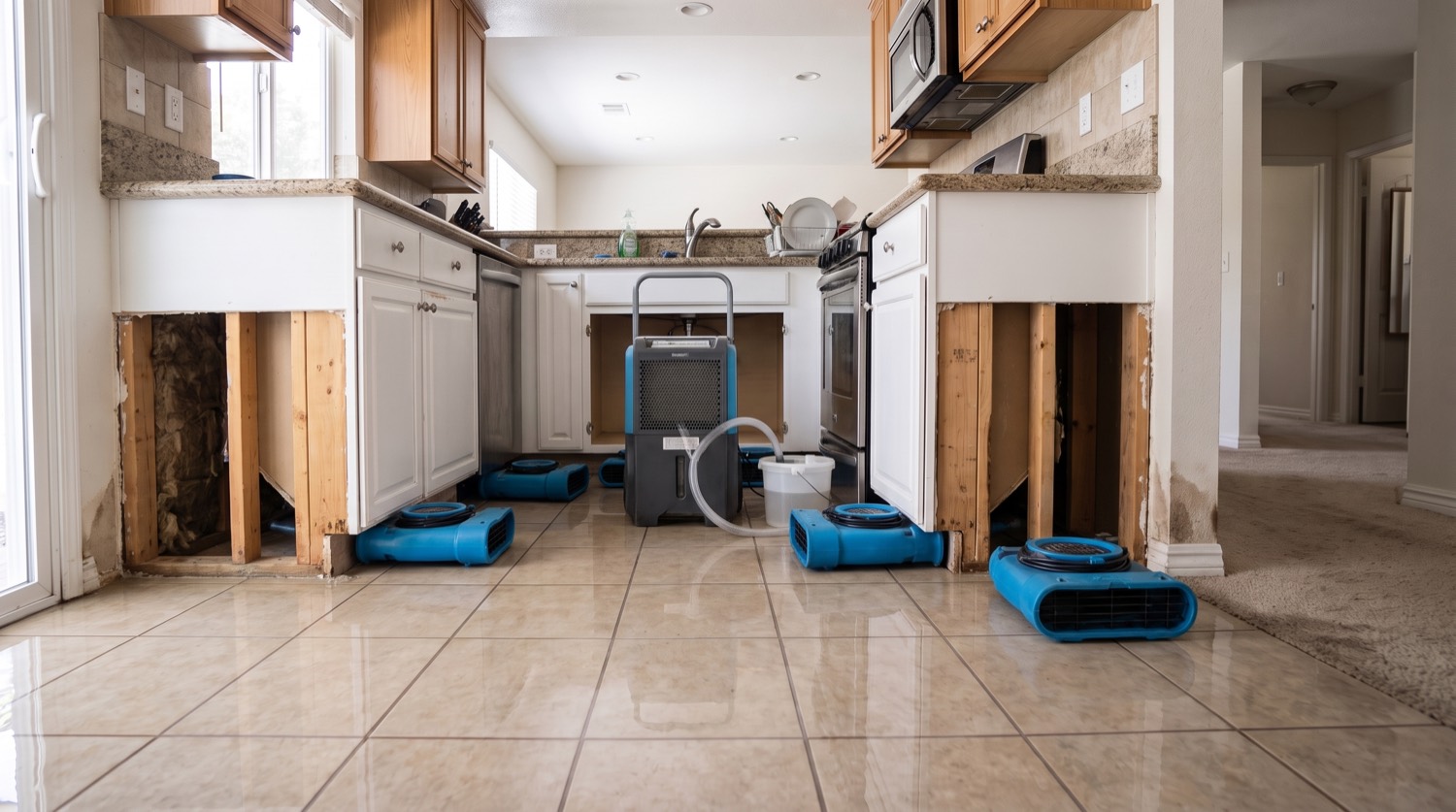
A flood cut at roughly 16 inches removes the wicked drywall and opens the wall cavity so it can actually dry. Toe-kicks come off for the same reason. Equipment is sized to the class of loss, not to what happens to be on the truck.
- Flood cut above the waterline; toe-kicks and base removed
- Air movers across surfaces, LGR dehumidifiers pulling the load
- Moisture content metered daily until it hits the dry standard
-
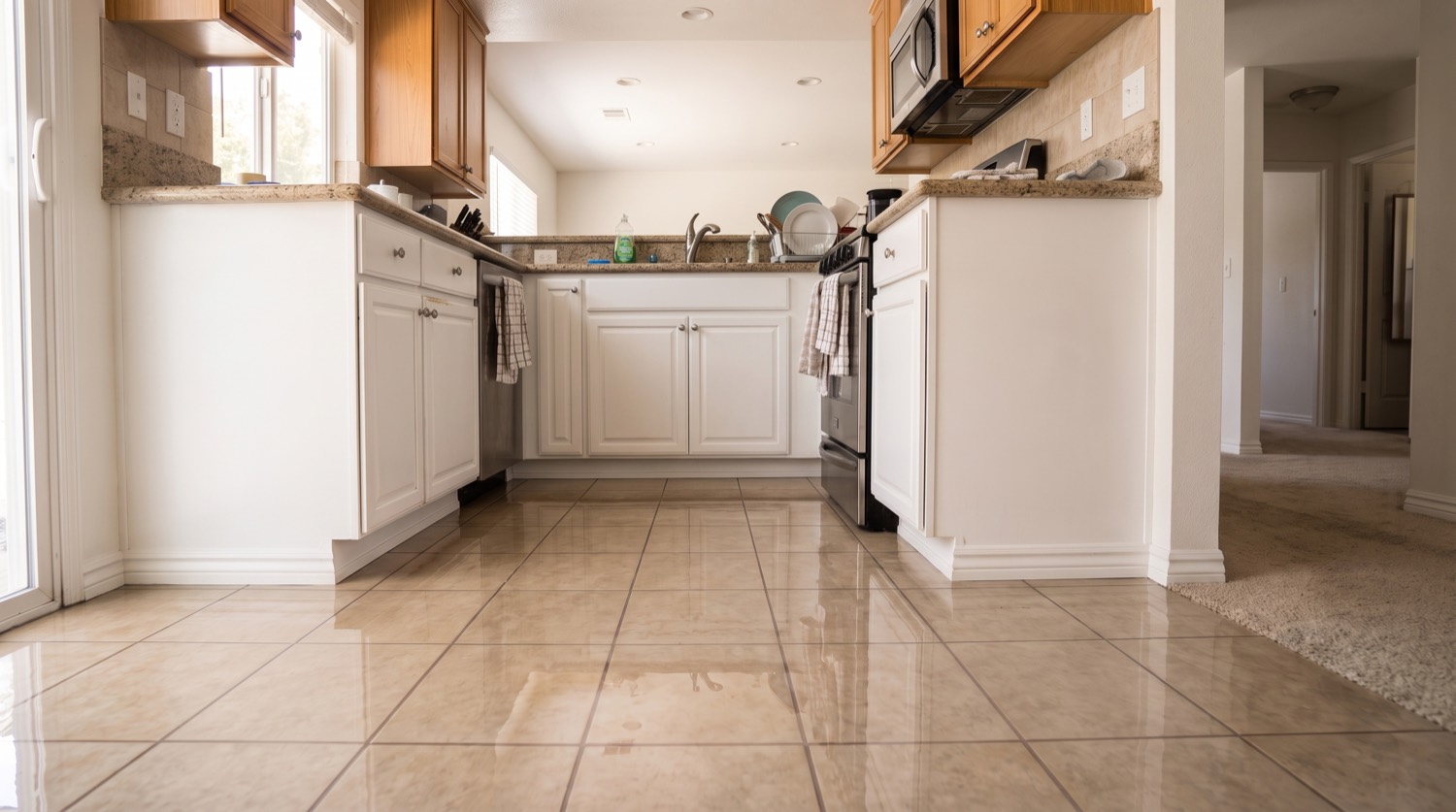
Drywall, base, paint and toe-kicks reinstated to match. The final readings and the daily log go to your adjuster with the file. That record is what proves the structure was dried correctly rather than simply closed up.
- Drywall, baseboard and paint matched to the existing finish
- Final moisture readings recorded at handover
- Full photo and reading log issued with the claim
Drag the seam: same room, same camera position · AI-generated visualization
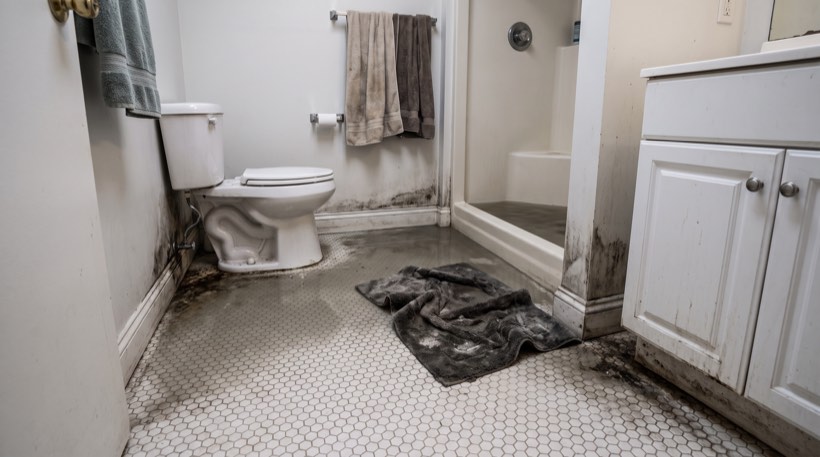
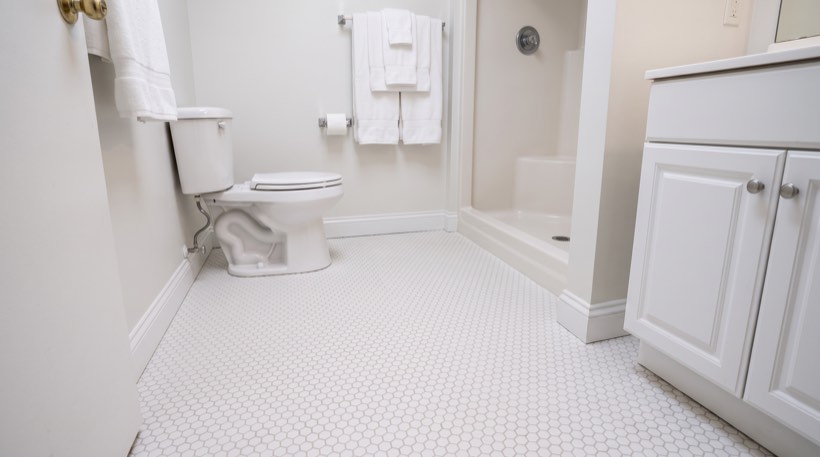
Sewage backup through a bathroom floor
Grossly contaminated water
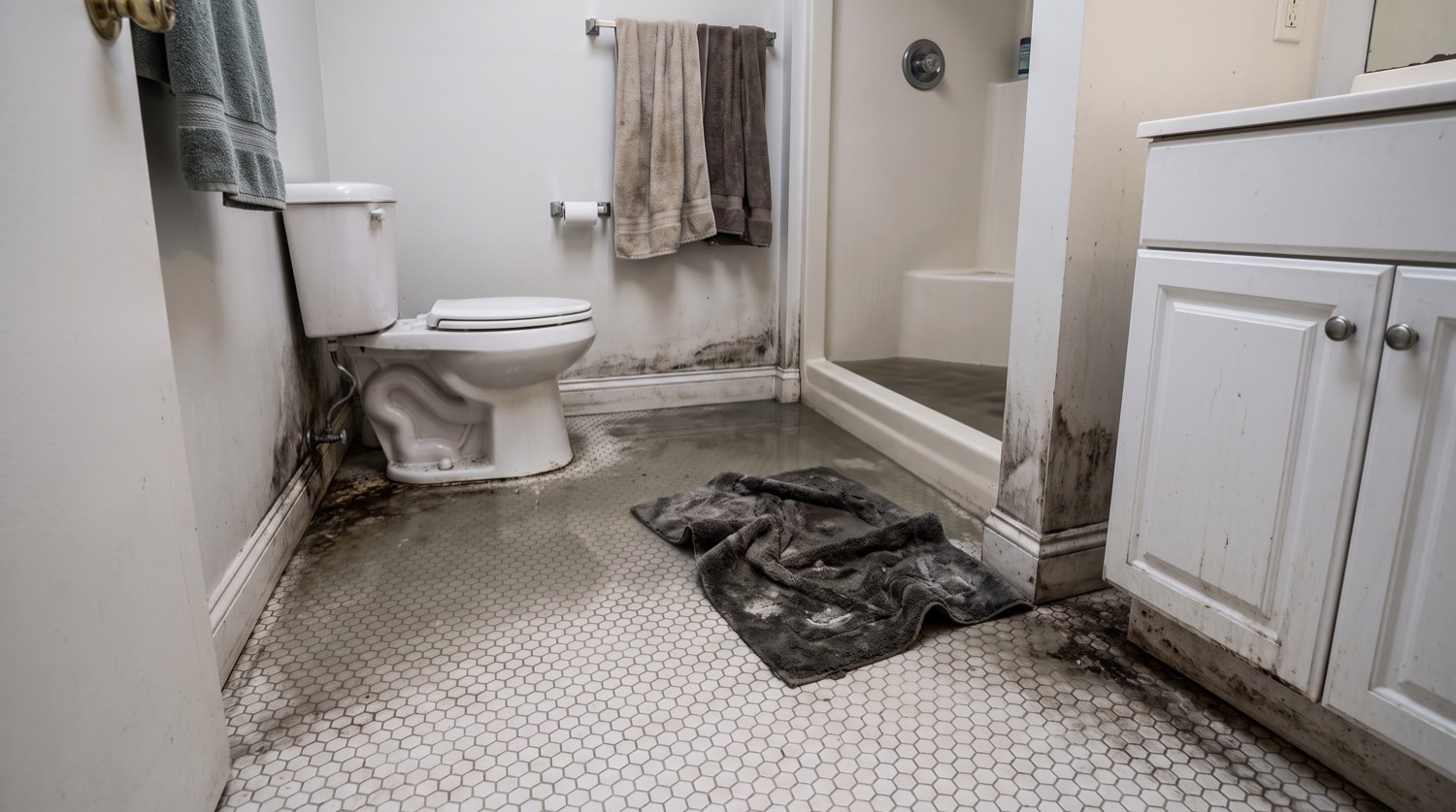
A blocked main pushes waste water back up through the lowest fixtures in the house. This is not a cleaning job. Category 3 water is grossly contaminated, and porous materials that absorbed it cannot be disinfected in place. They come out.
- Category
- 3, contaminated
- Class
- 2
- Affected
- ~90 sq ft
- Dry time
- 3 days + clearance
-
Category 3 water carries bacteria and other harmful agents. The risk is not the moisture, it is what the moisture is carrying, so the response is a decontamination sequence, and occupants stay out of the affected area.
- Keep people and pets out of the affected rooms
- Don't run the HVAC. It will move contamination through the house
- Porous materials that absorbed it are not salvageable
-
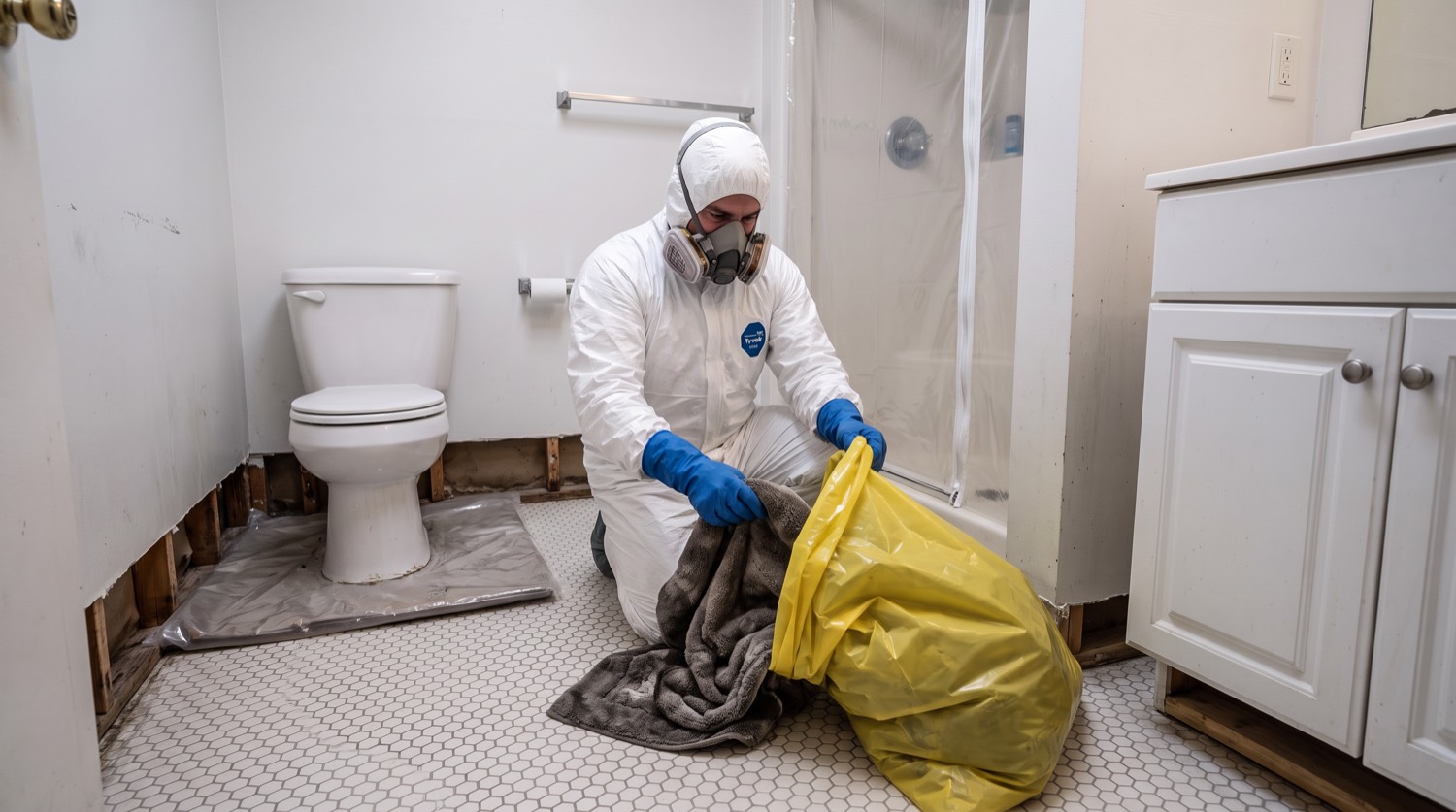
A sealed containment barrier and negative air pressure go up before anything is disturbed, so nothing migrates into clean parts of the property. Crews work in full PPE. Affected porous materials are bagged inside the containment and removed.
- Zip-wall containment with negative air machine
- Full PPE: coveralls, gloves, respiratory protection
- Contaminated flooring, base and drywall bagged and disposed
-
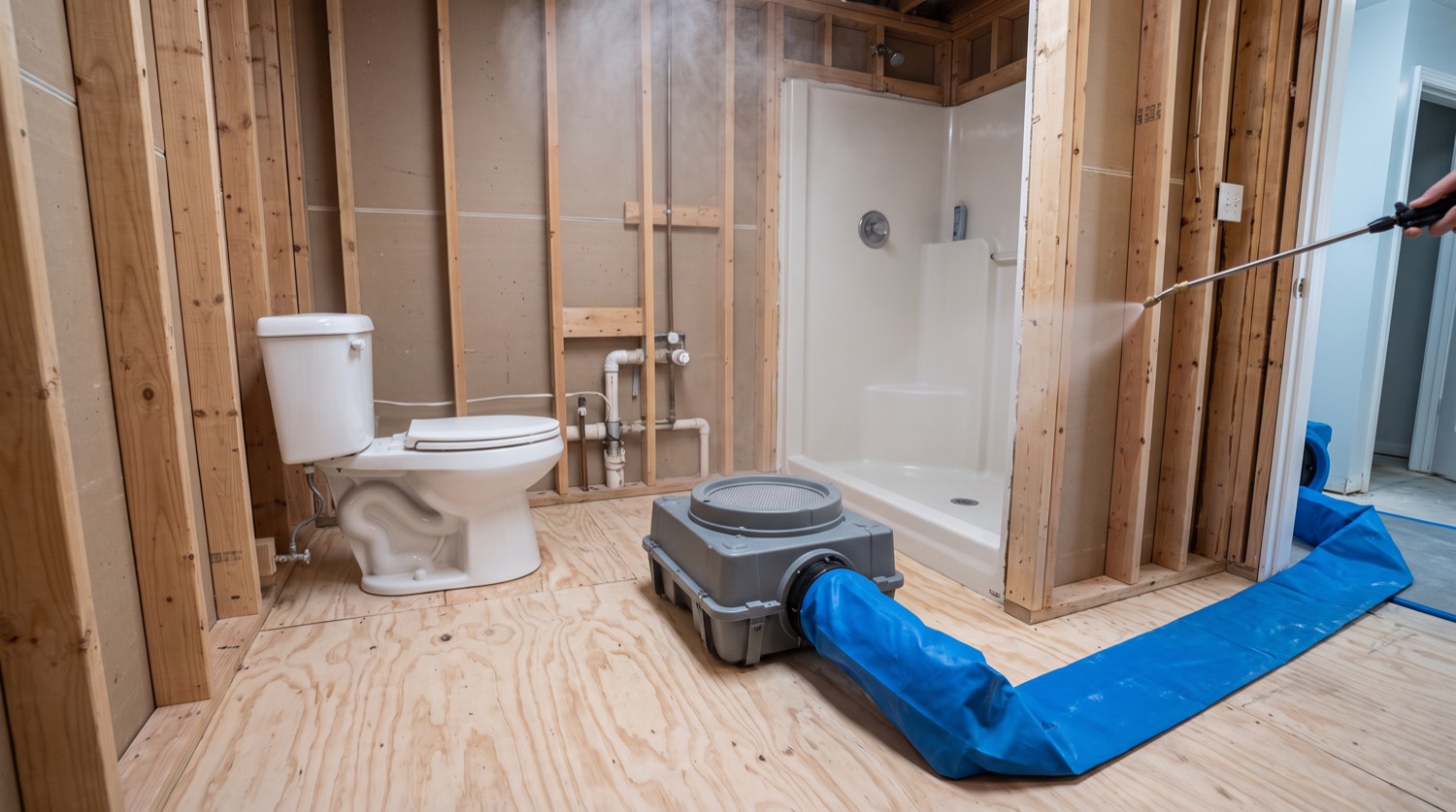
With the porous material gone, what remains is cleanable structure. It is cleaned first, an antimicrobial applied over soil does nothing, then treated, then dried under HEPA filtration.
- Structure cleaned before any antimicrobial is applied
- HEPA air scrubbing throughout the drying period
- Post-remediation verification before containment comes down
-
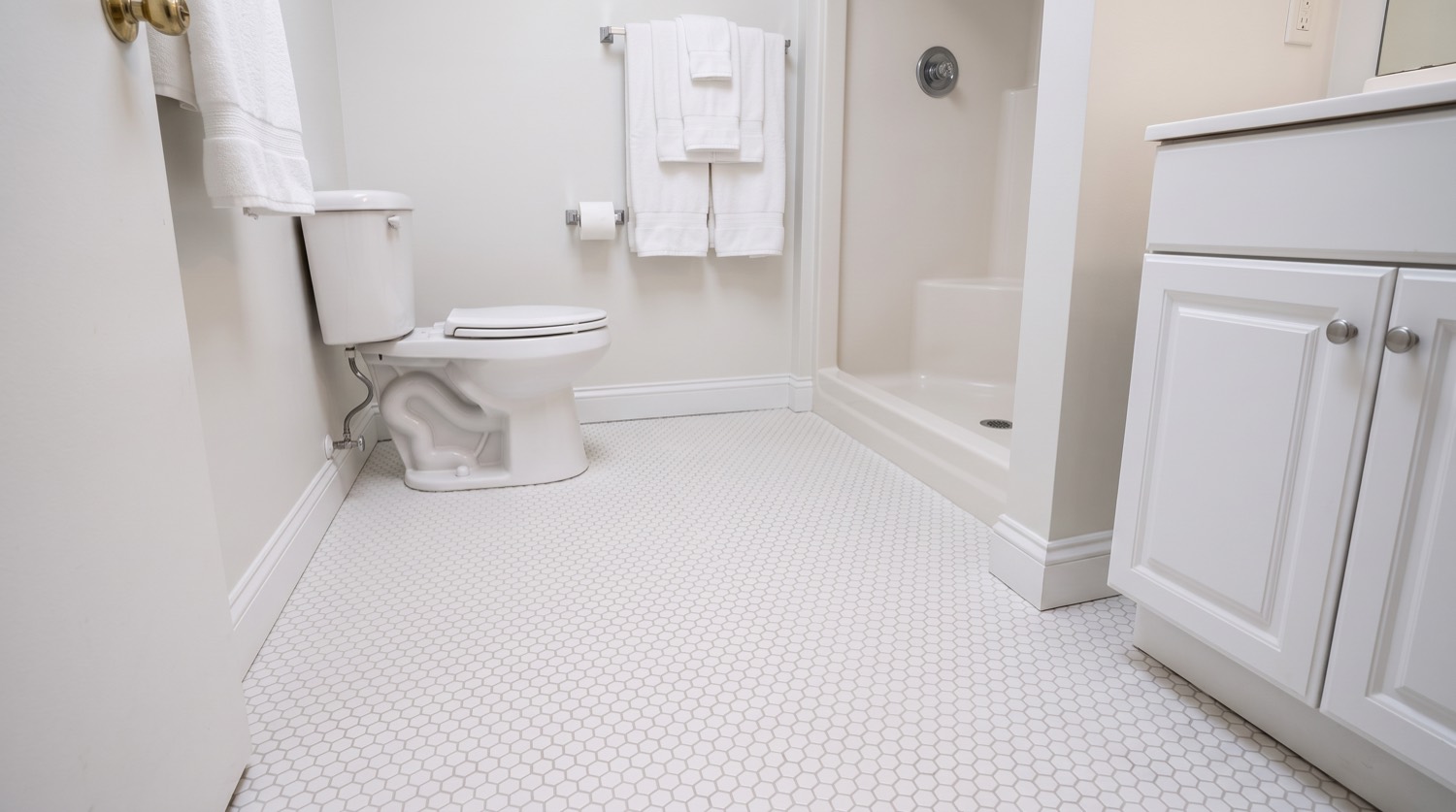
Subfloor where it was compromised, then tile, base, vanity and a reset toilet on a new seal. Everything that was removed is replaced new. Nothing porous that touched Category 3 water goes back in.
- New subfloor where the original was compromised
- New tile, base, vanity; toilet reset on a fresh seal
- Clearance documentation issued with the file
Drag the seam: same room, same camera position · AI-generated visualization
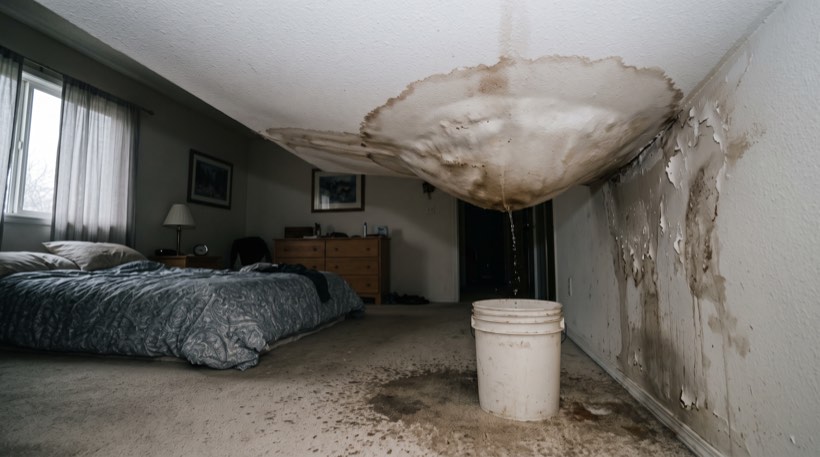
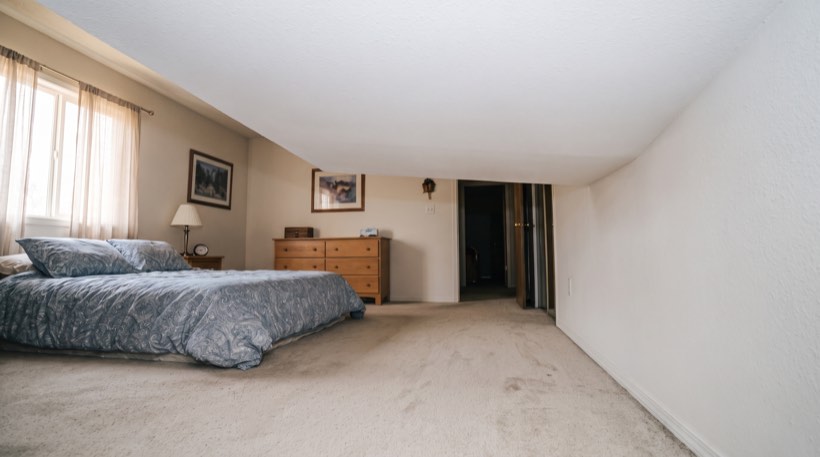
Storm roof leak into a bedroom ceiling
The stain is the symptom
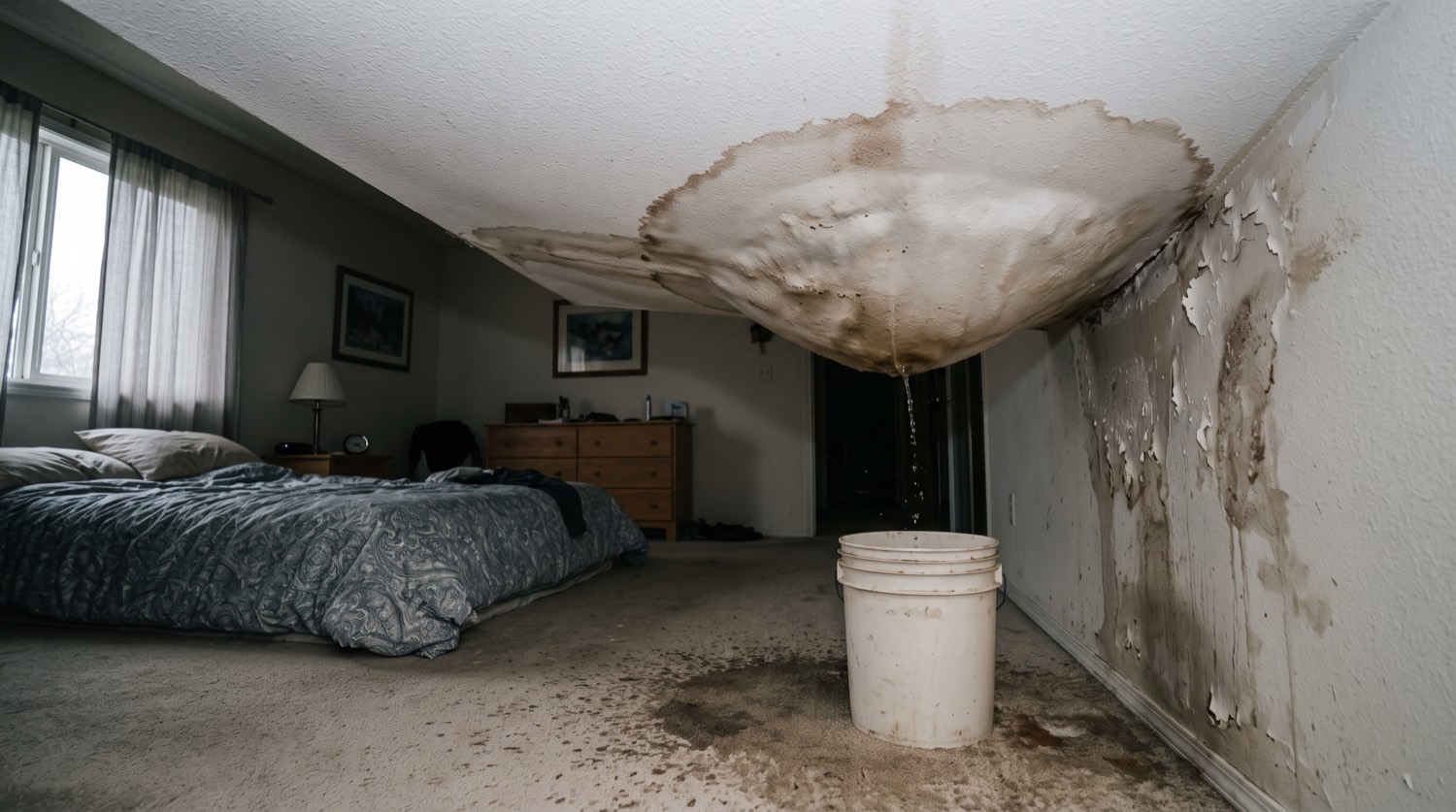
Wind lifts shingles, rain finds the deck, and days later a brown ring appears on a bedroom ceiling. By the time it shows, the insulation above it is already saturated and the drywall is carrying weight it was never designed to hold.
- Category
- 1 → 2
- Class
- 2
- Affected
- ~200 sq ft
- Dry time
- 3 days
-
A stain is a map of where water has already been. A sag means the assembly is actively holding water and can fail without warning: which is why nobody stands under it and why the room gets cleared before anything else happens.
- Sagging drywall can release its whole load at once
- The wet area is always larger than the stain
- Wet insulation loses its R-value and does not recover
-
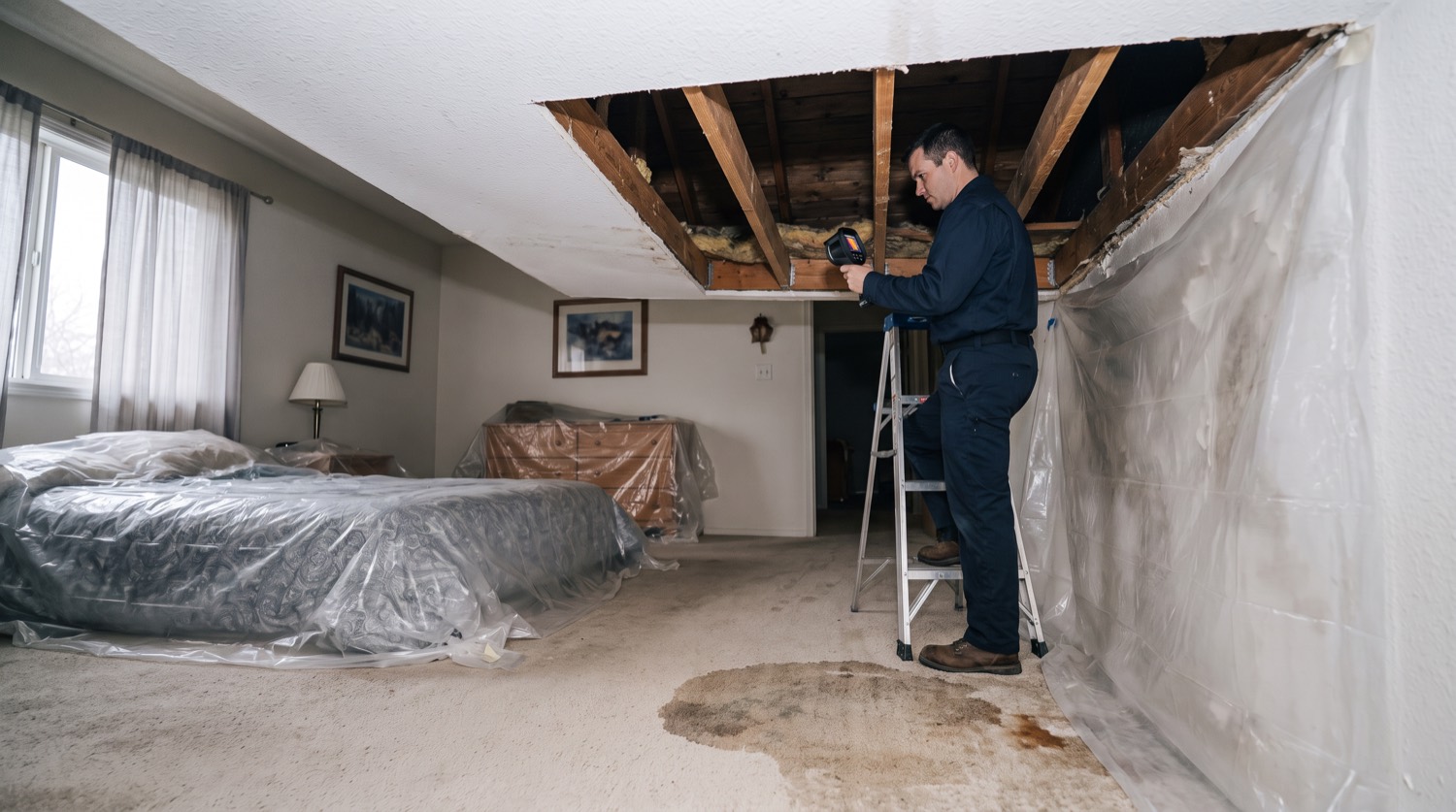
There is no point drying a ceiling while it is still raining into it. The roof is tarped and dried in, then the failed section is taken down in a controlled cut and the saturated insulation is removed rather than dried.
- Roof tarped and dried in before interior work starts
- Controlled removal of the failed ceiling section
- Saturated insulation removed. It is replaced, not dried
-
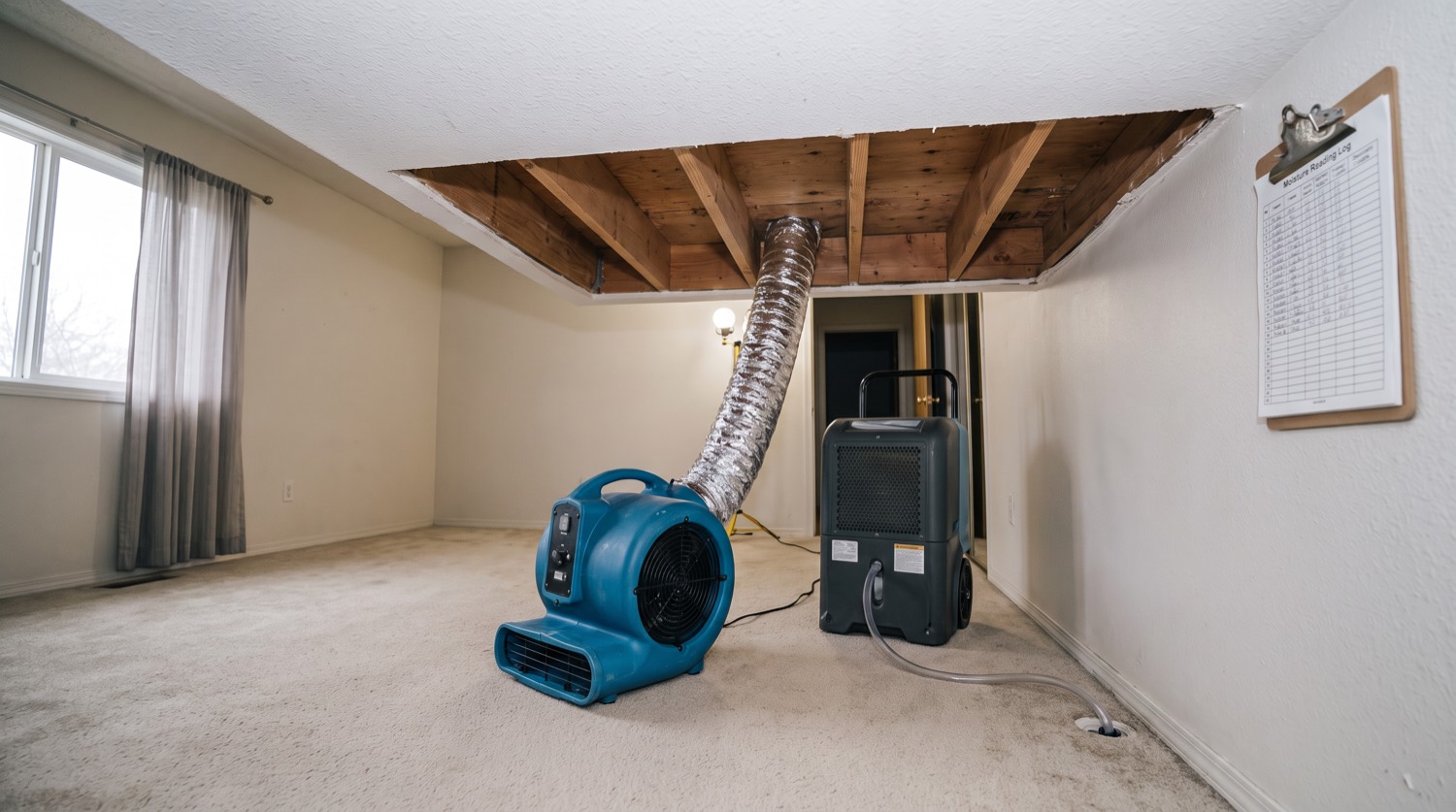
Air is directed into the open ceiling cavity and across the joists, with a dehumidifier carrying the moisture load out of the room. Thermal imaging finds the wet perimeter so the drying setup covers the whole affected area.
- Directed airflow into the open cavity and across framing
- Thermal imaging to confirm the full wet perimeter
- Daily readings on joists, deck and adjacent drywall
-
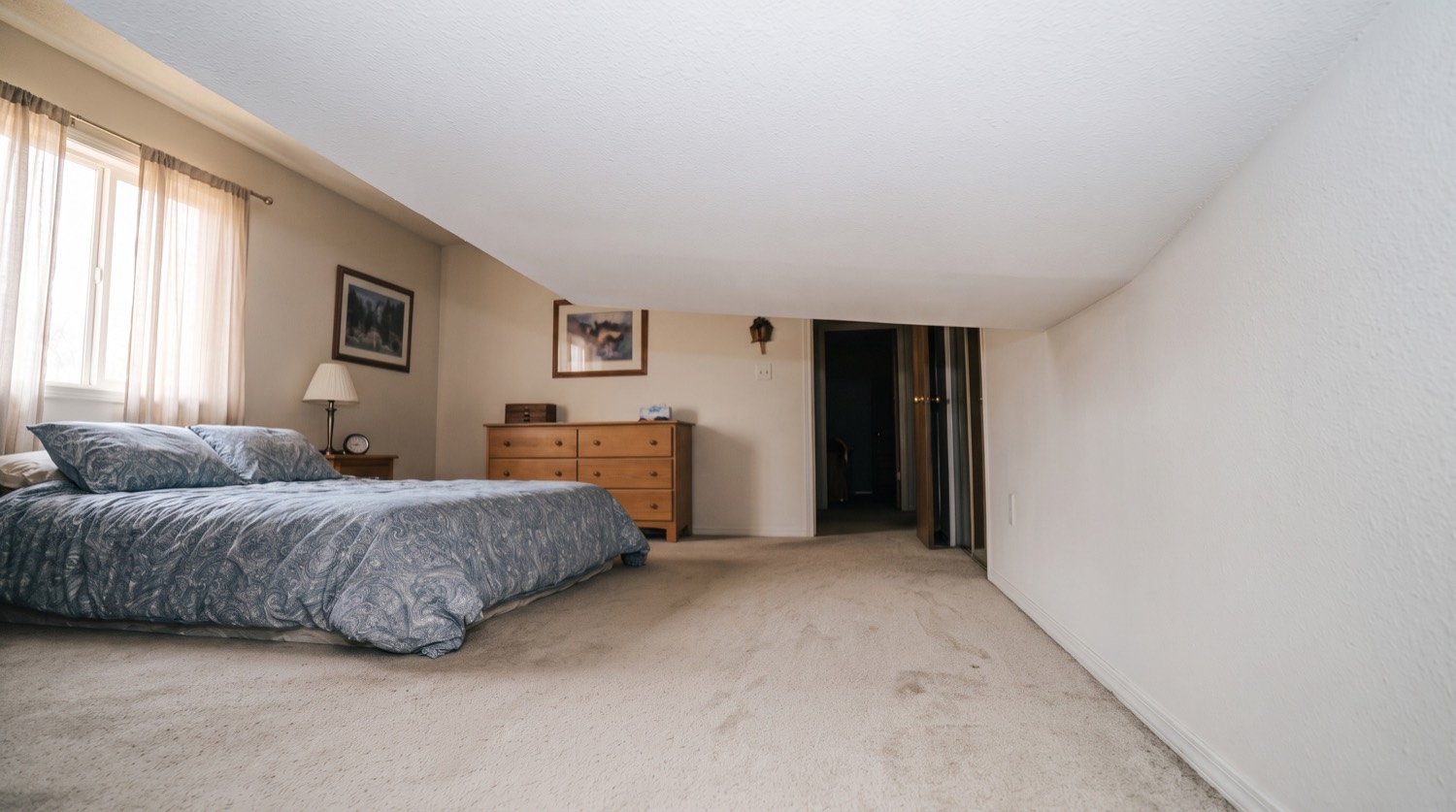
New insulation to the correct R-value, new drywall, and the ceiling texture matched so the repair does not read as a patch. Carpet cleaned, and the room put back the way it was.
- Insulation replaced to specification
- Drywall, texture match and paint across the full ceiling plane
- Carpet cleaned and re-laid; room reset
Drag the seam: same room, same camera position · AI-generated visualization
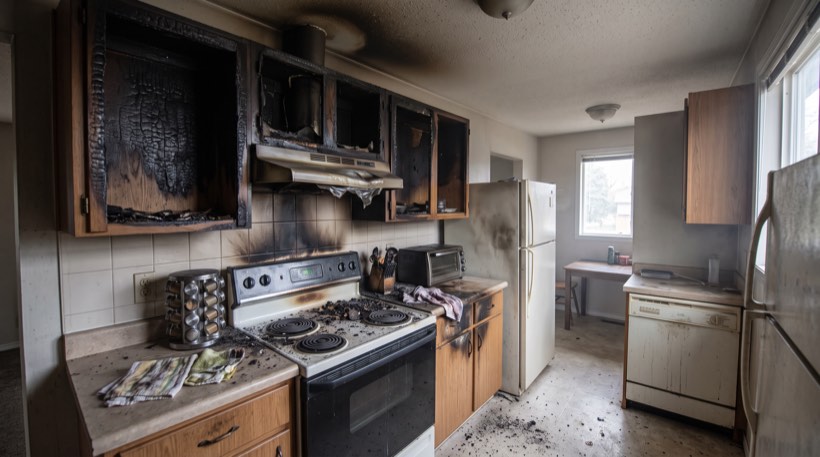
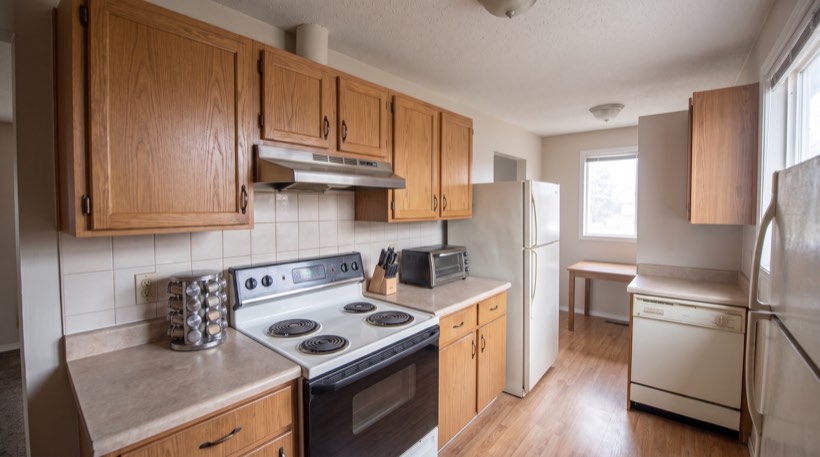
Grease fire above a kitchen range
Acidic residue, short fuse
A pan fire is out in ninety seconds and the damage looks contained to the cabinets above the range. It isn't. Protein and grease residue has already carried on the air into every room, and soot is acidic. It etches what it settles on.
- Residue
- Protein / grease
- Affected
- Whole floor
- On site
- Within hours
- Duration
- 3–4 weeks
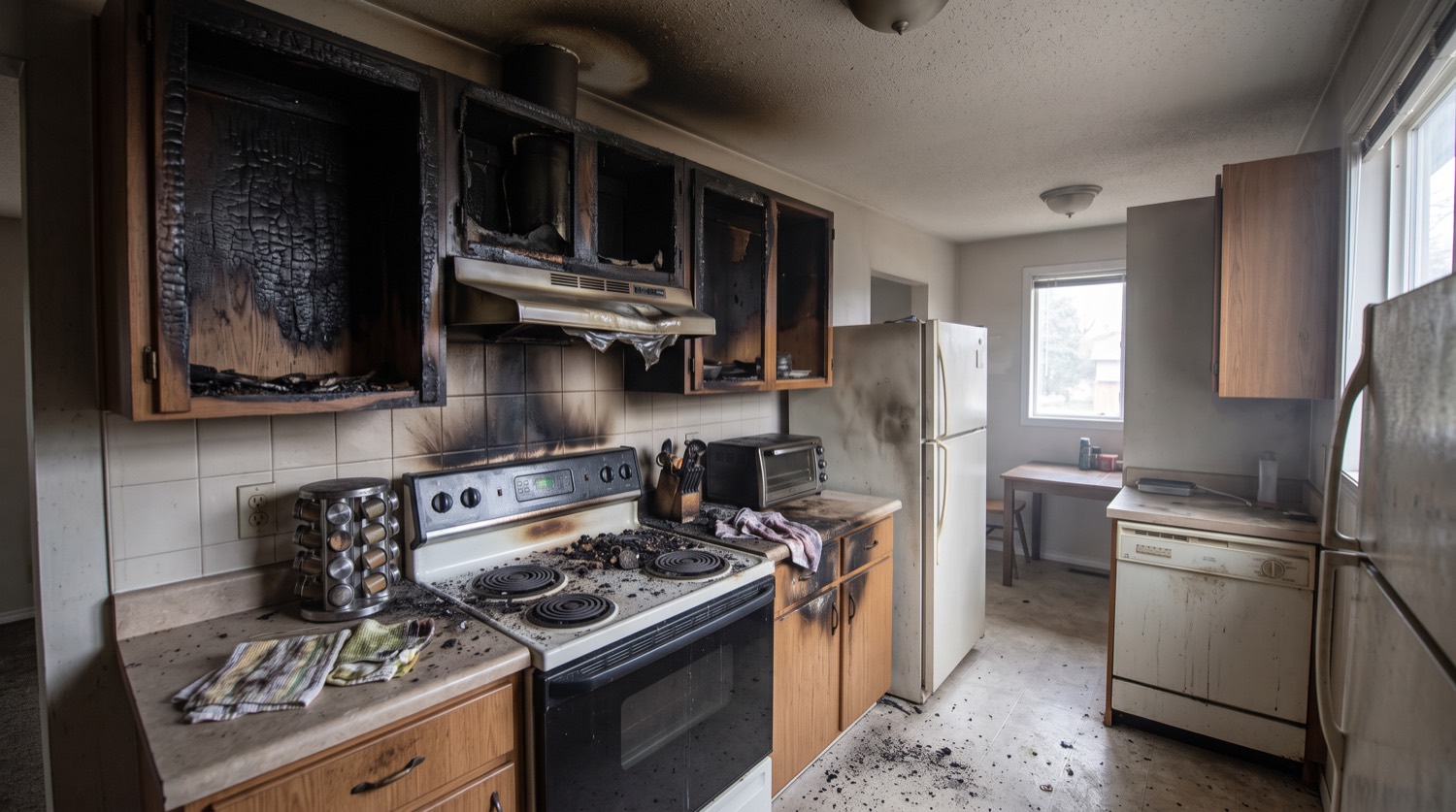
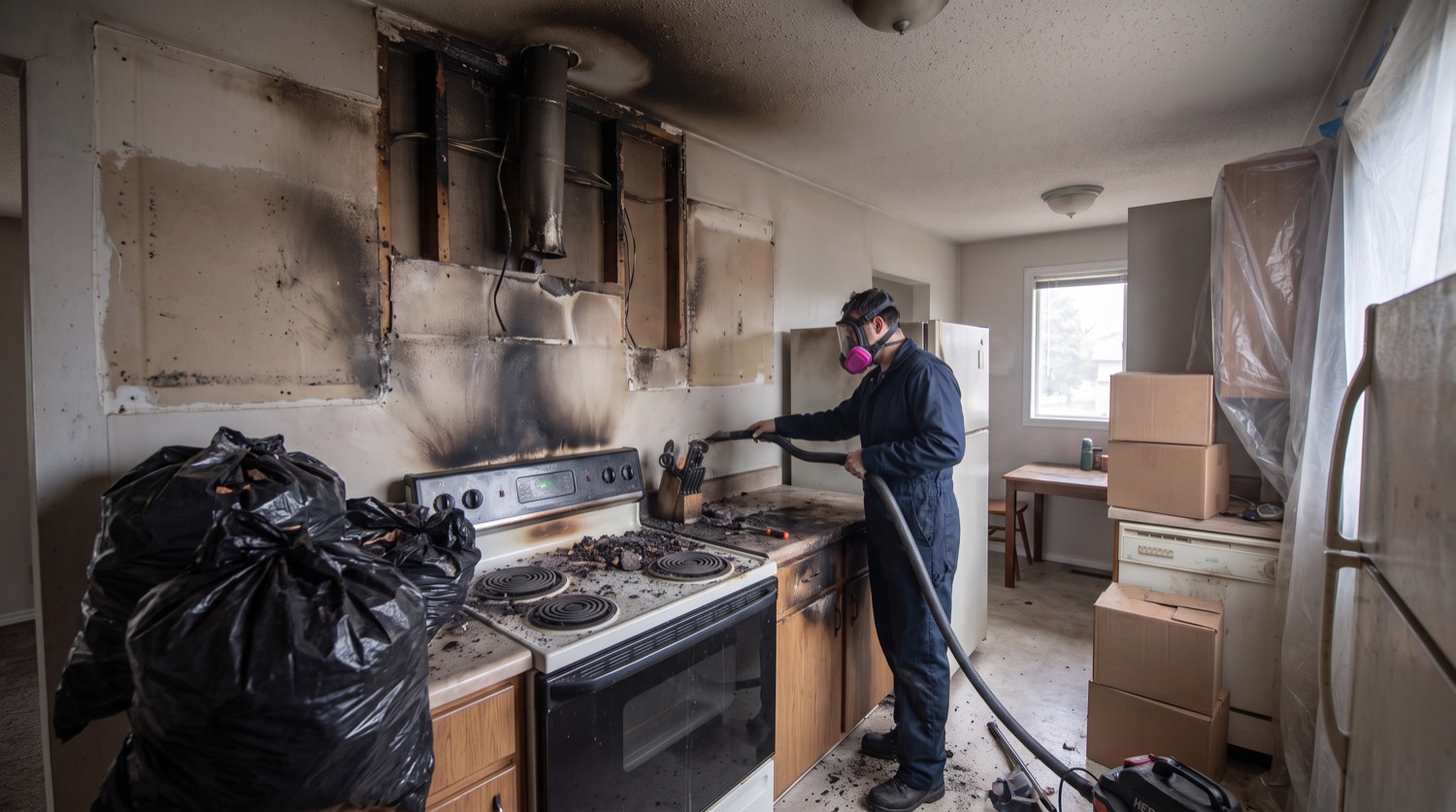
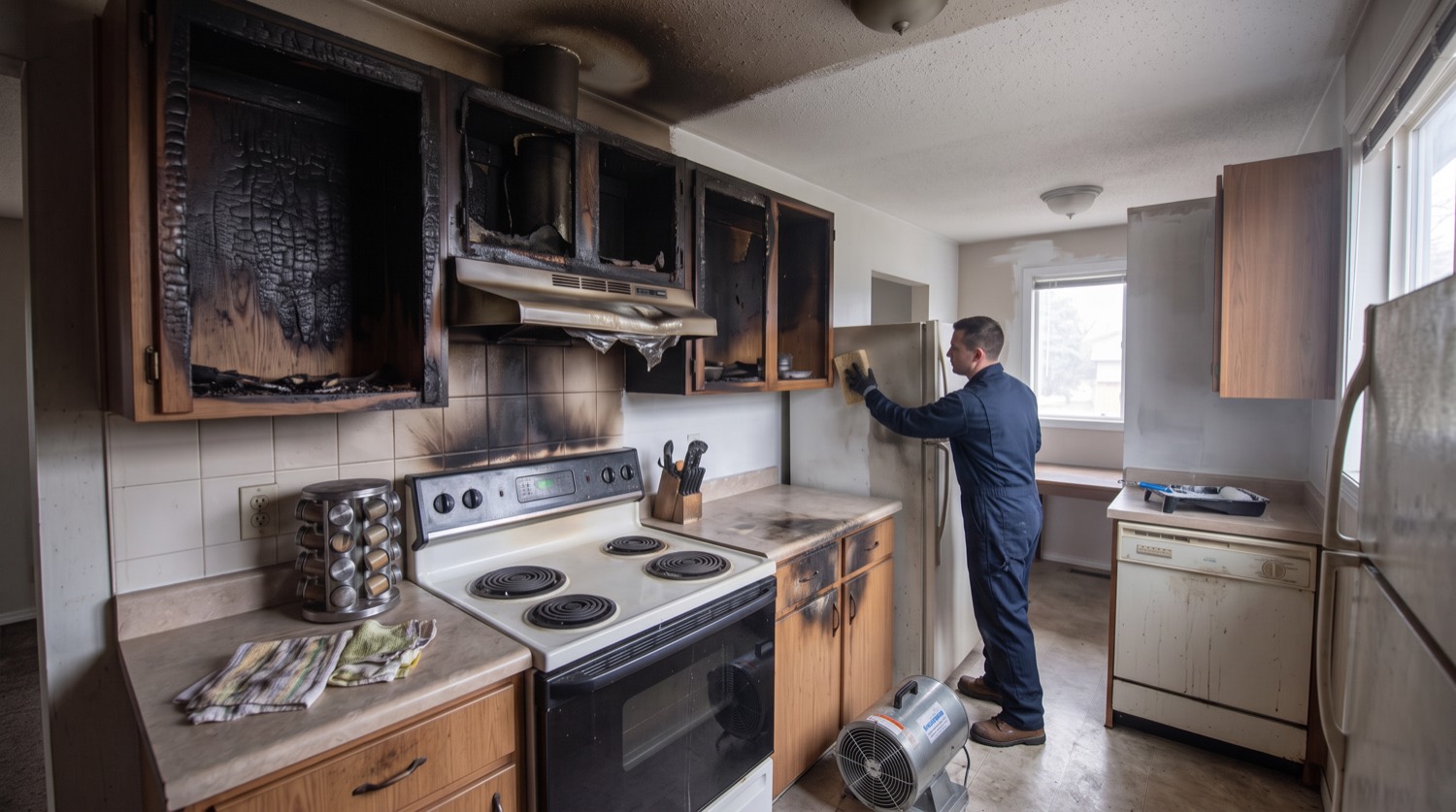
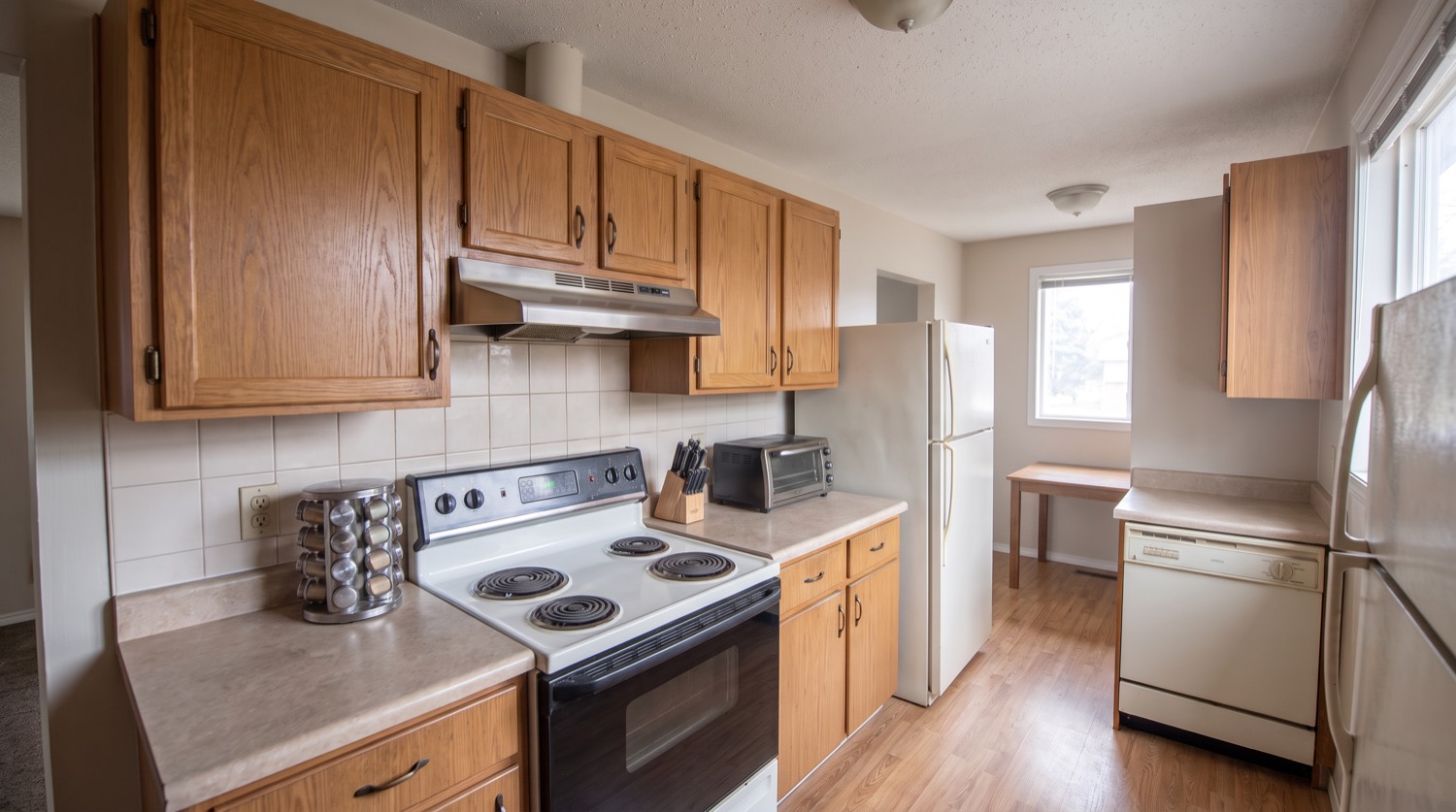
-
Soot is acidic. Left on metal, stone, grout and finished surfaces it moves from a cleaning problem to permanent etching within days. The difference between a clean and a replacement is often just how fast someone started.
- Acidic residue etches metal, stone and grout within days
- Protein residue is nearly invisible and intensely persistent
- Residue travels the whole property on air currents
-
Burnt material is removed and disposed. Contents are inventoried and packed out to be cleaned off site, which both protects them from continuing residue exposure and clears the space to work in.
- Charred cabinetry and unsalvageable material removed
- Contents inventoried, packed out and cleaned off site
- HEPA vacuuming and air filtration from day one
-
There is no single soot cleaner. Dry smoke lifts with a dry chemical sponge and is made worse by water; protein and grease need a solvent or degreaser. Once clean, surfaces are sealed, and odor is treated at its source rather than covered.
- Dry sponge for dry smoke; degreaser for protein and grease
- Stain-blocking sealer over cleaned substrates
- Hydroxyl or ozone treatment: neutralized, not perfumed
-
New cabinetry, hood, paint and flooring to match. The job is not finished when it looks right. It is finished when it smells like nothing at all, including on the first warm humid day after handover.
- New cabinetry, range hood, backsplash and paint
- Contents returned clean and deodorized
- Odor verified after the property is closed up warm
Drag the seam: same room, same camera position · AI-generated visualization
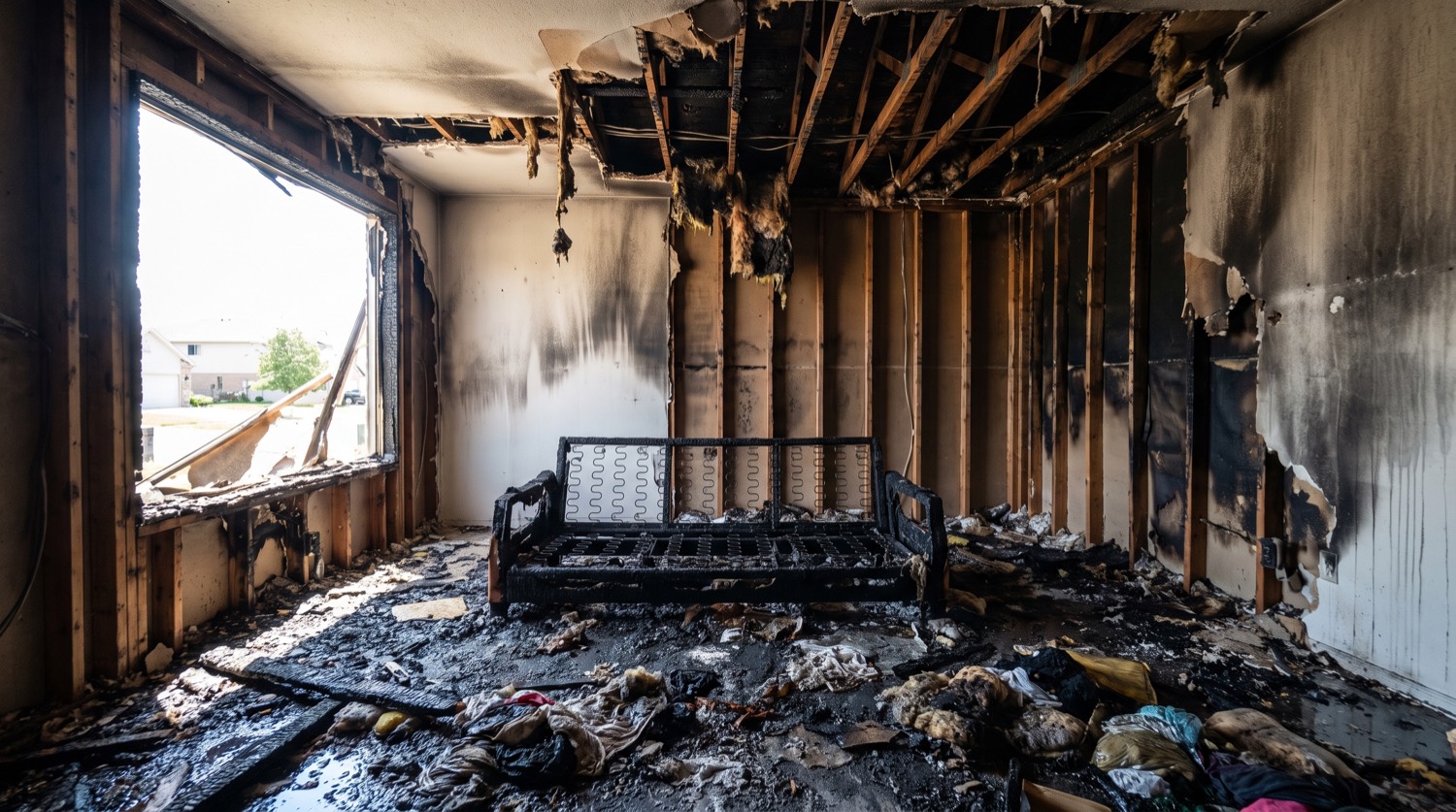
Structure fire in a living room
Two losses at once
The fire is out, and now there are two problems running on the same clock: everything the fire destroyed, and everything the suppression water soaked. Fire damage waits. Water damage does not.
- Damage
- Fire + water
- Affected
- Room + adjacent
- Secure
- Board-up day 1
- Duration
- 2–4 months
-
An open structure is an insurance problem and a safety problem. Board-up and temporary weather protection happen first, alongside an assessment of what is structurally sound and what is not.
- Emergency board-up and roof protection
- Structural assessment before anyone works inside
- Suppression water extracted immediately. That clock is running
-
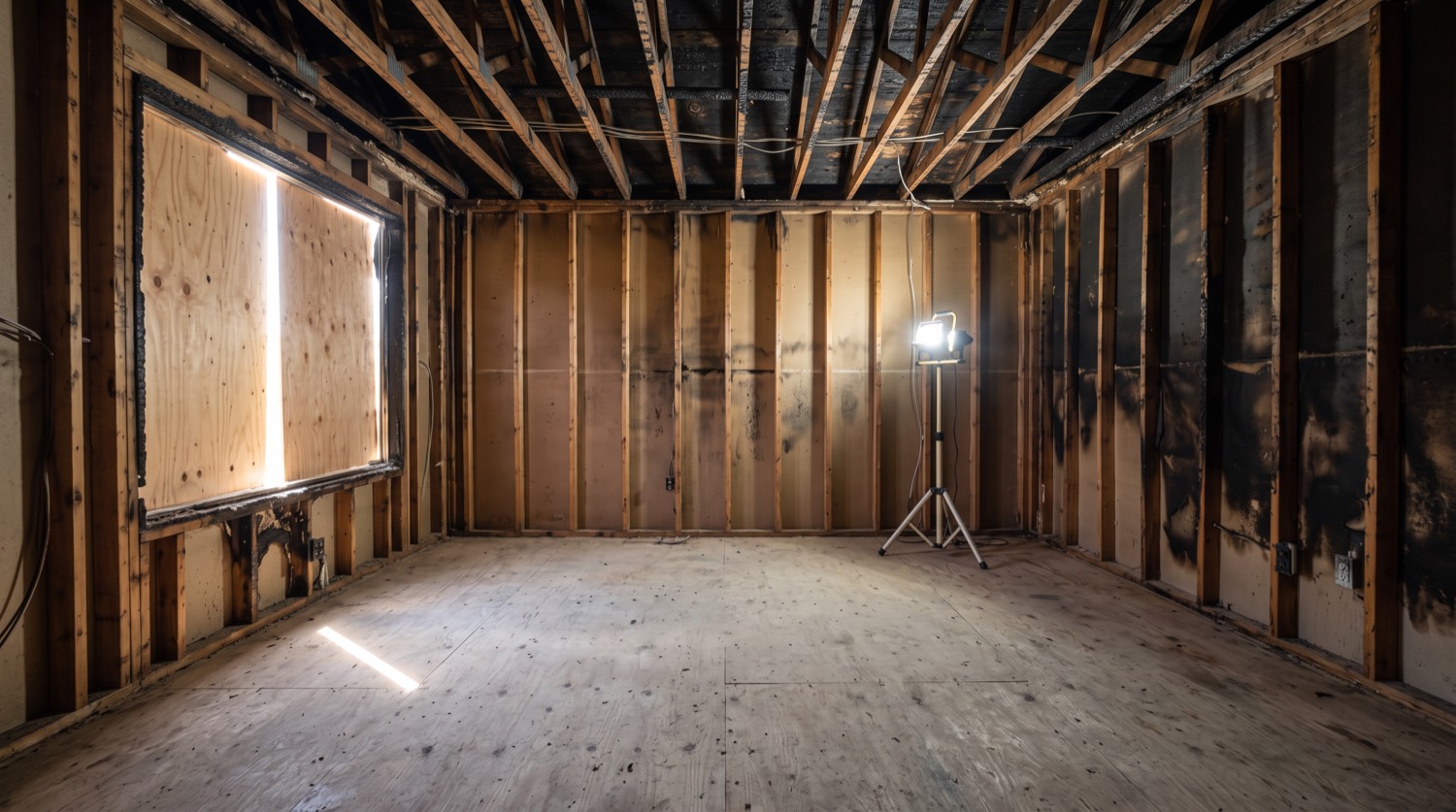
Everything compromised comes out: finishes, insulation, contents, and any framing that has lost section to charring. Where framing is questionable it is replaced or reinforced on an engineer's direction, not on a judgement call.
- Finishes, insulation and unsalvageable contents removed
- Charred framing evaluated for lost section
- Structural repairs specified by an engineer where required
-
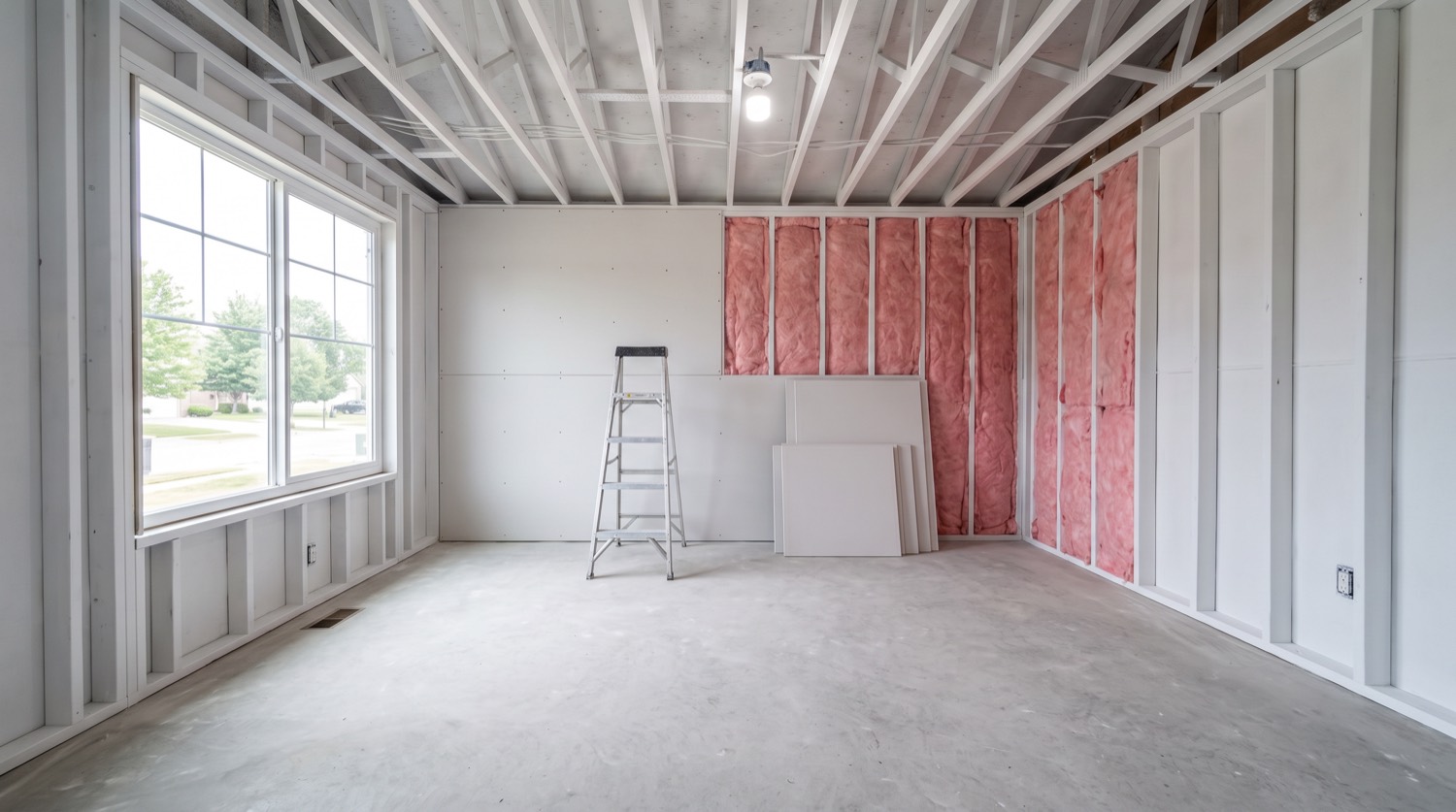
Remaining framing is abrasive blasted, soda or dry ice, to take the char layer off the surface, then coated in a stain-blocking sealer. Skipping the seal is why some rebuilt houses still smell of smoke a year later.
- Soda or dry-ice blasting to remove the char layer
- Stain-blocking sealer across all remaining framing
- Structure confirmed dry before it is closed up
-
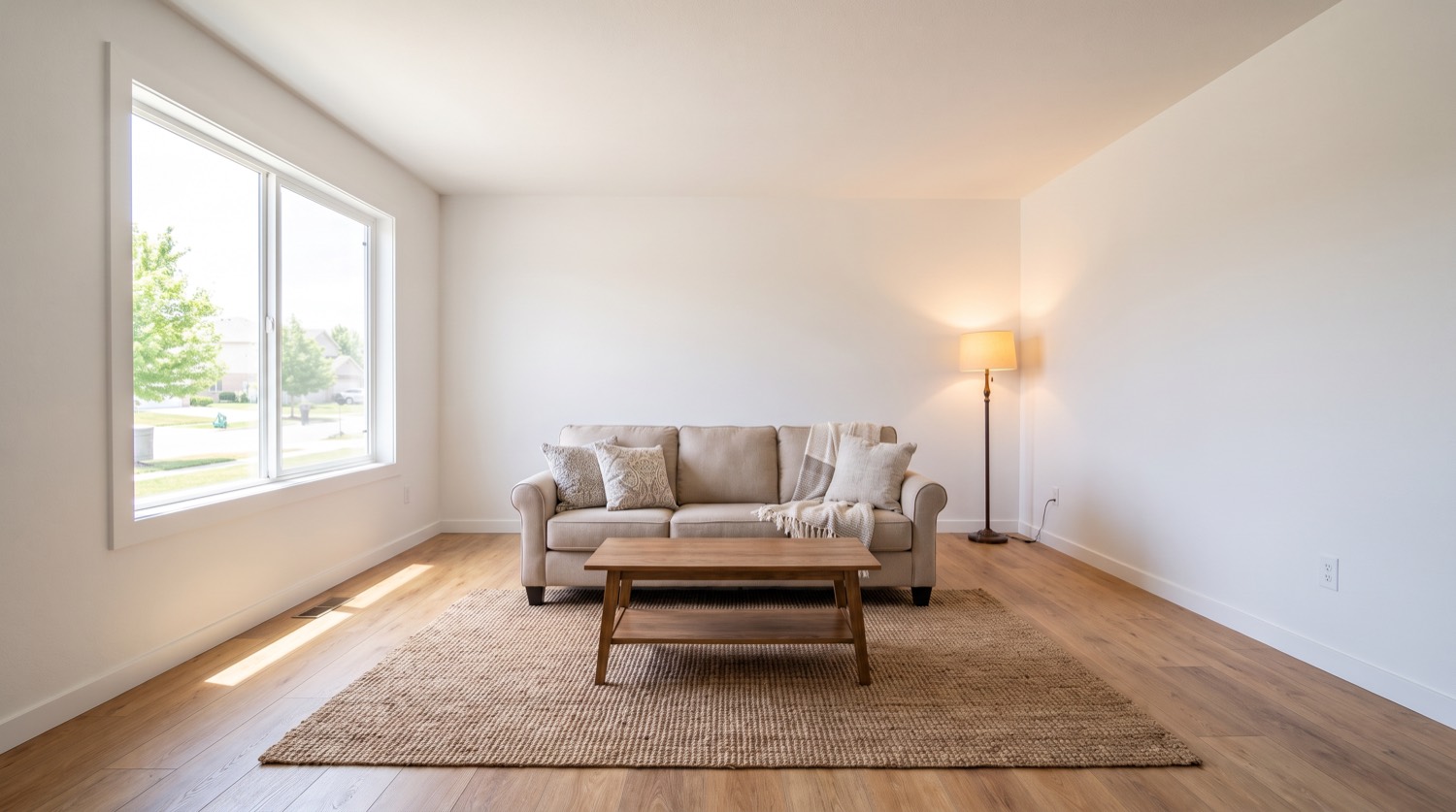
Insulation, drywall, windows, flooring, trim and paint: the room reinstated as it was, to current code. Final walkthrough with you, and the complete file to your carrier.
- Full rebuild: insulation, board, glazing, floor, trim, paint
- Brought to current code where the rebuild triggers it
- Walkthrough with you before the file closes
Drag the seam: same room, same camera position · AI-generated visualization
Smoke and soot damage with no burning
Nothing burned in here
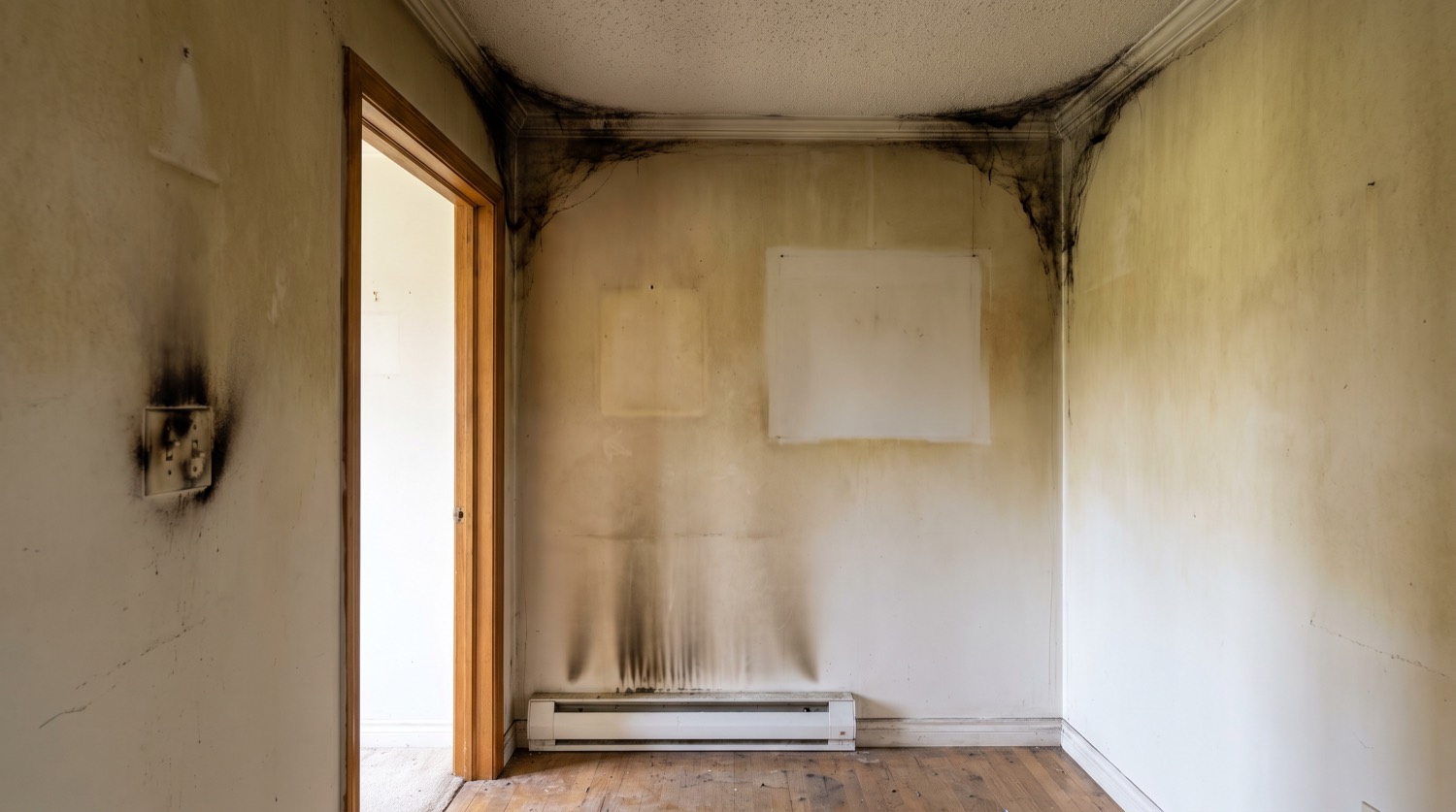
The fire never reached this hallway. Every finish in it is still a loss. Smoke follows air currents and settles on cooler surfaces, which is why the damage often shows up worst in rooms nobody would think to check.
- Residue
- Dry smoke
- Structure
- Undamaged
- Finishes
- Total loss
- Duration
- 1–2 weeks
-
Soot deposits on cooler surfaces and around airflow: corners, ceiling lines, above heat sources, around outlets and door frames. The clean rectangle where a picture hung is the measure of how much film is on everything else.
- Deposits concentrate at corners, ceiling lines and airflow paths
- Ghosting appears above heat sources and around fixtures
- Odor is held in porous finishes, not just on the surface
-
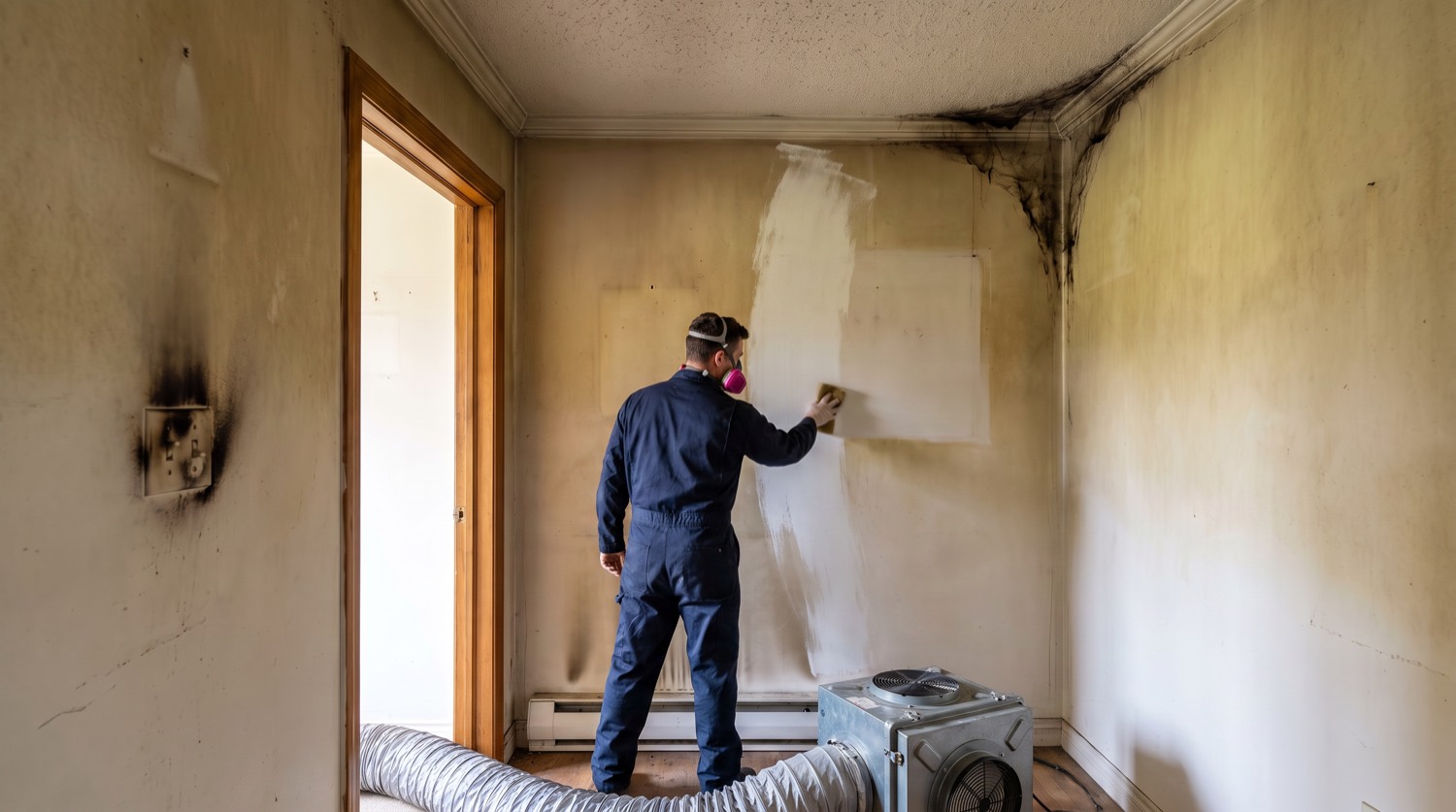
Dry smoke residue is lifted with a dry chemical sponge before any liquid touches the wall. Wetting it first turns a removable film into a smear that is driven into the substrate. Air scrubbers run throughout so nothing recirculates.
- Dry chemical sponge before any wet cleaning
- HEPA air scrubbing on negative pressure throughout
- Worked top down: ceiling, walls, then floor
-
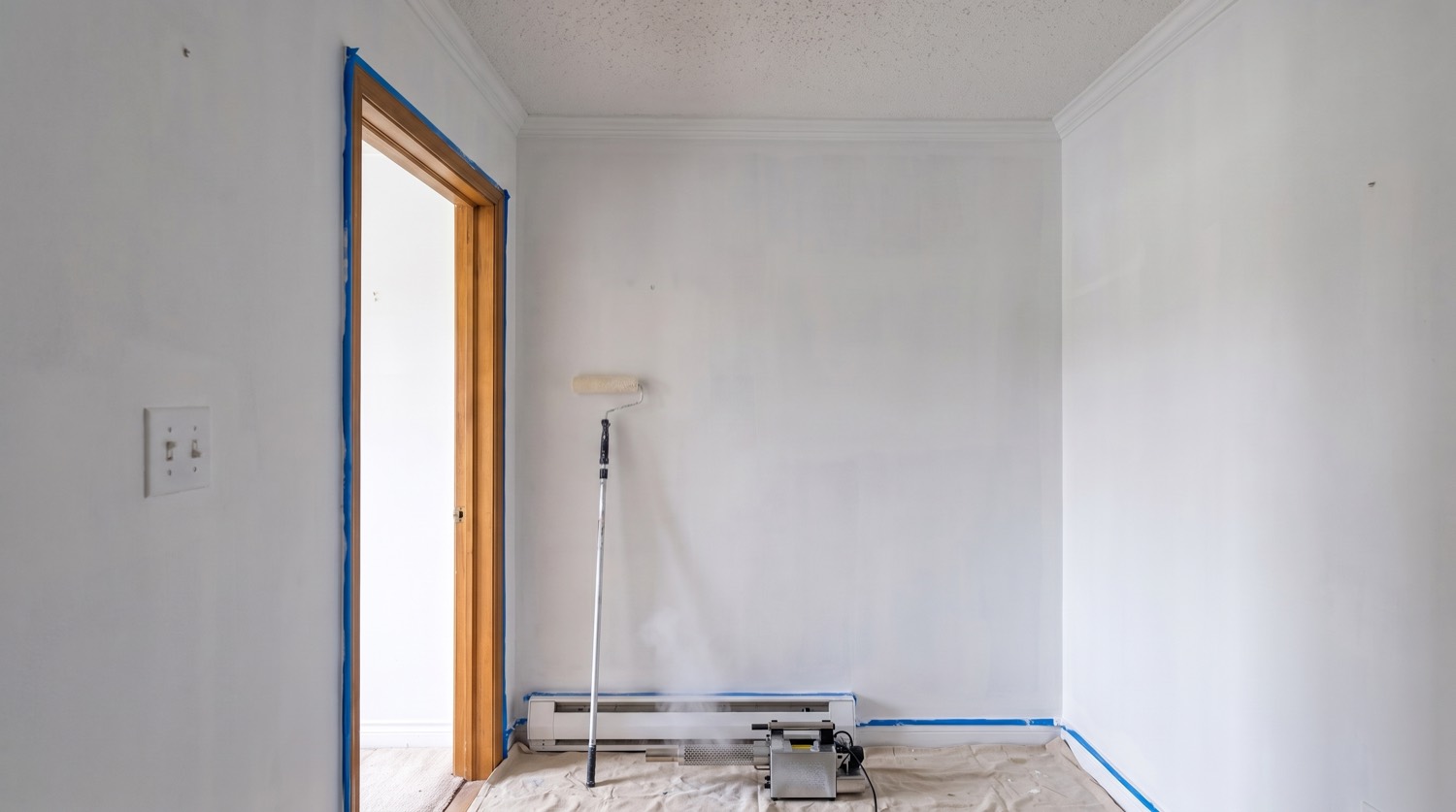
Cleaned surfaces are coated in a stain-blocking sealer, which stops residual staining bleeding through new paint and locks in any odor the substrate has absorbed. Thermal fogging reaches porous materials that cannot be wiped.
- Stain-blocking sealer over all cleaned surfaces
- Thermal fogging for porous materials and cavities
- HVAC and ductwork cleaned so it doesn't re-contaminate
-
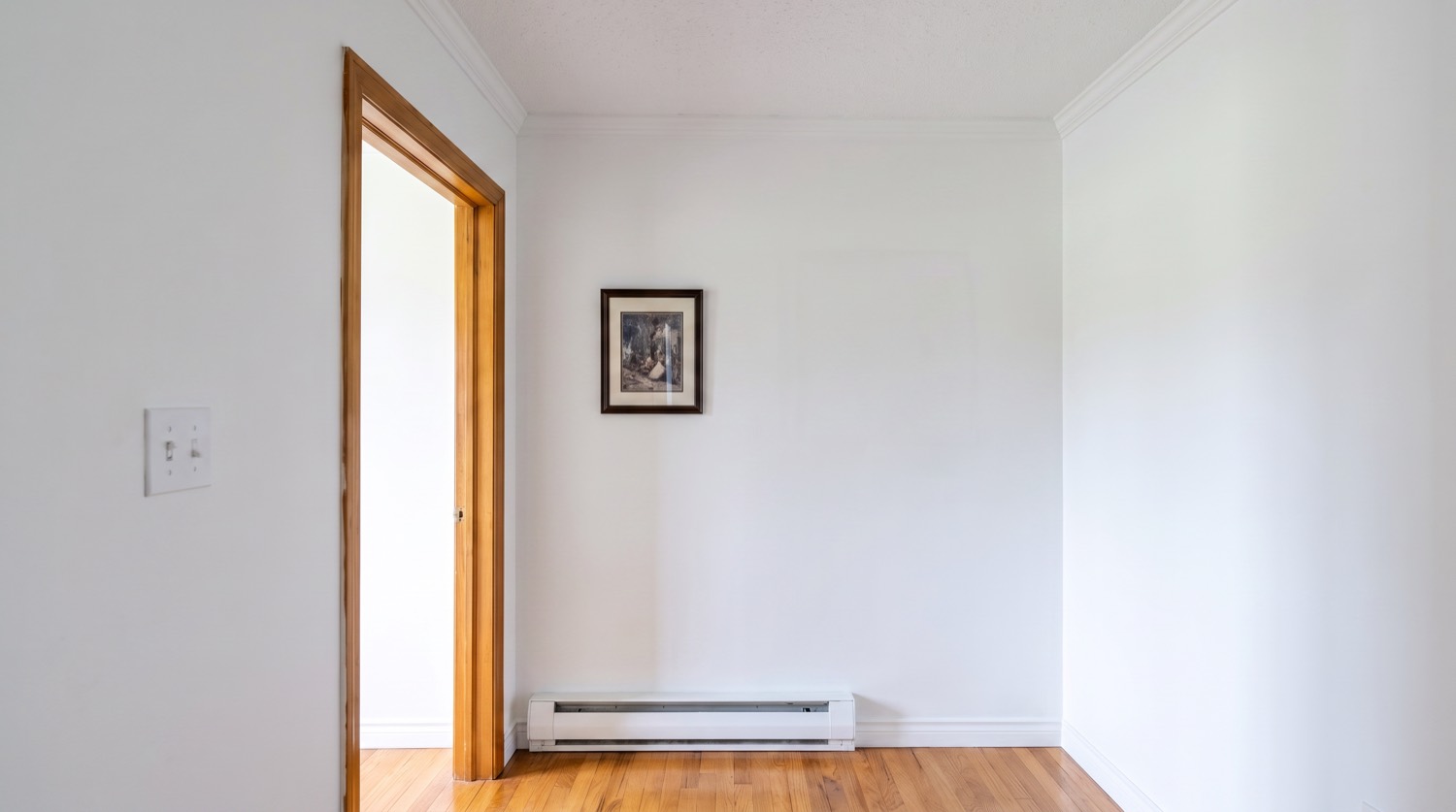
Repainted throughout, trim refinished, fittings replaced. The test is not visual: it is closing the house up warm and coming back to a space that smells of nothing at all.
- Full repaint over sealed surfaces; trim refinished
- Switch plates, covers and soft fittings replaced
- Odor verified with the property closed up and warm
Drag the seam: same room, same camera position · AI-generated visualization
None of this gets smaller by waiting.
Water spreads through materials by the hour and soot etches what it settles on within days. The sooner someone is documenting and mitigating, the shorter every sequence on this page gets.